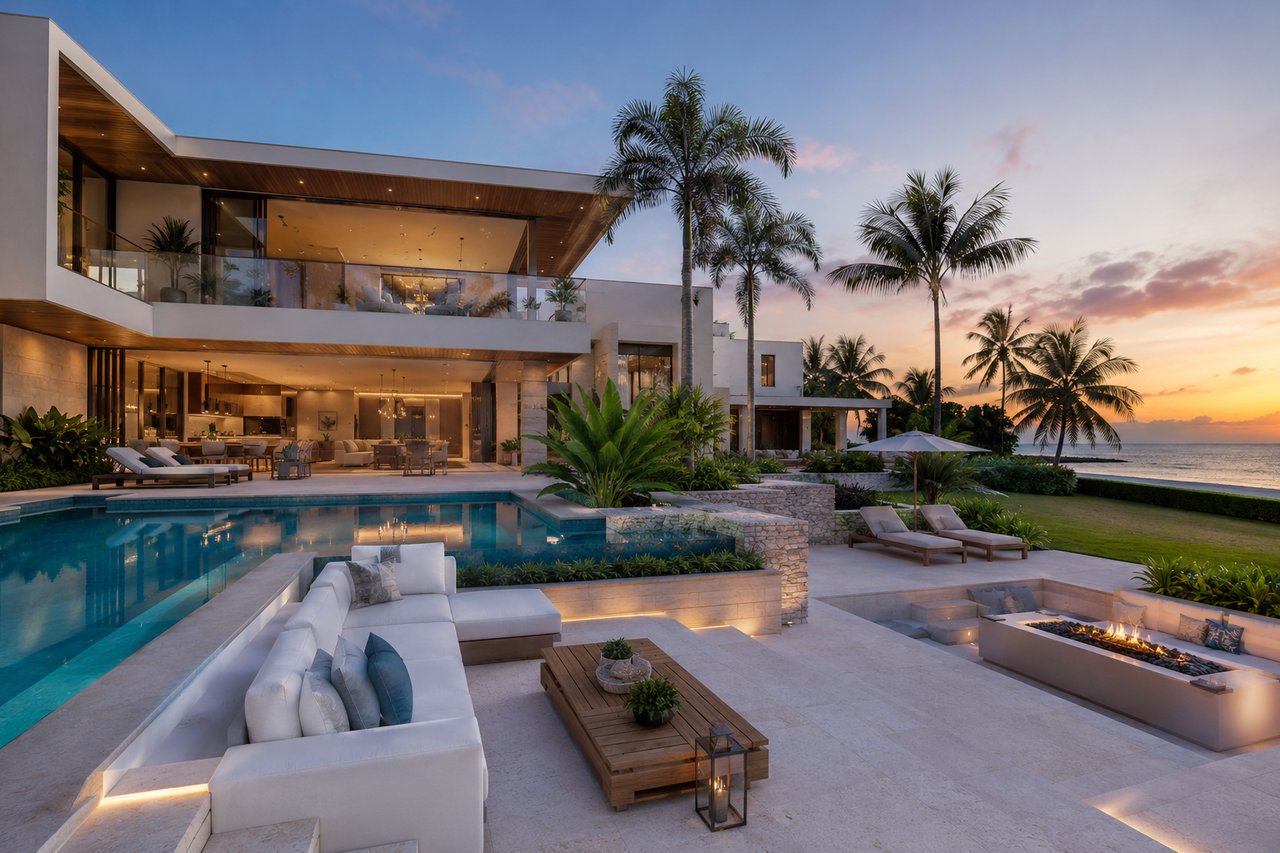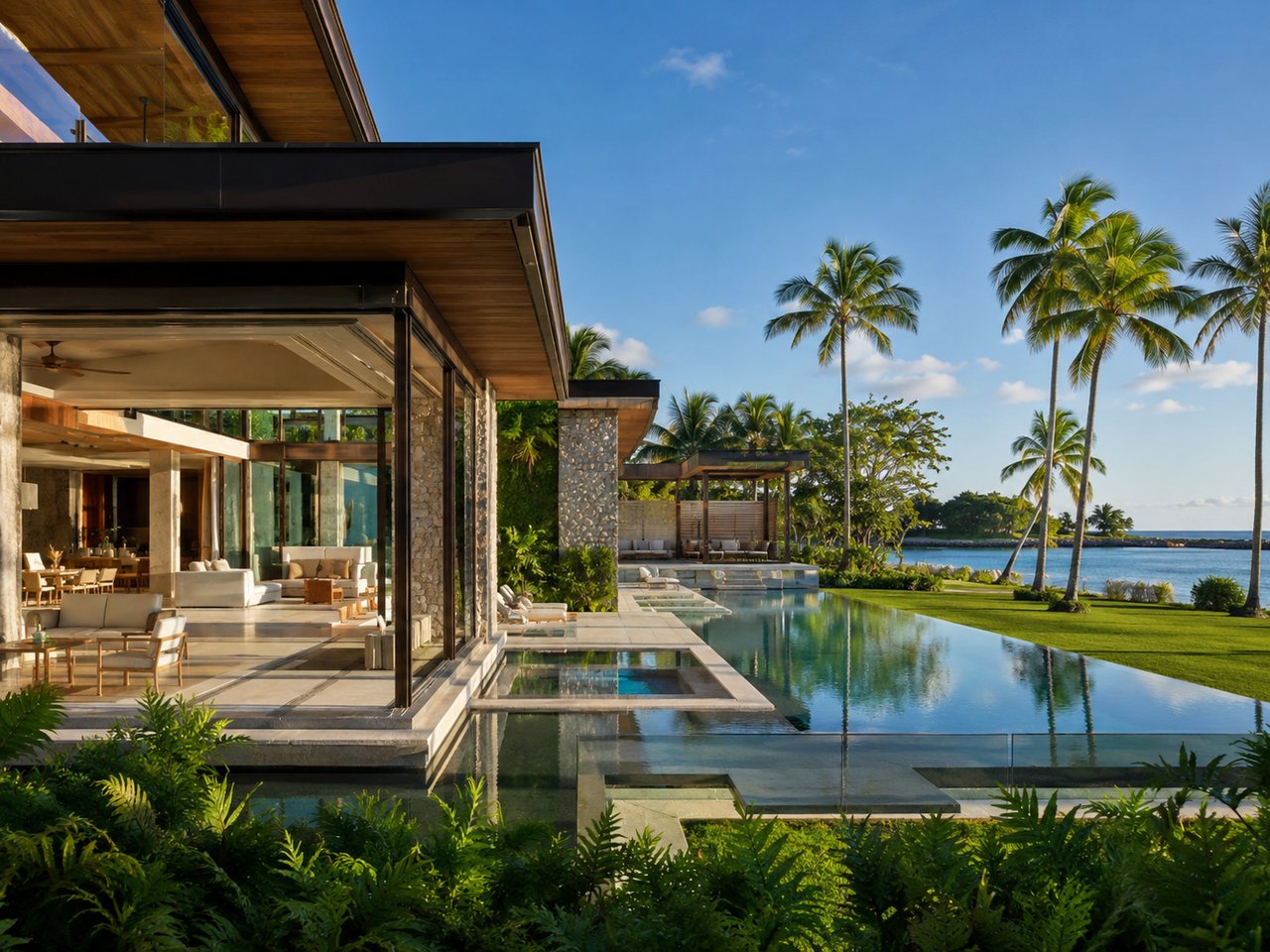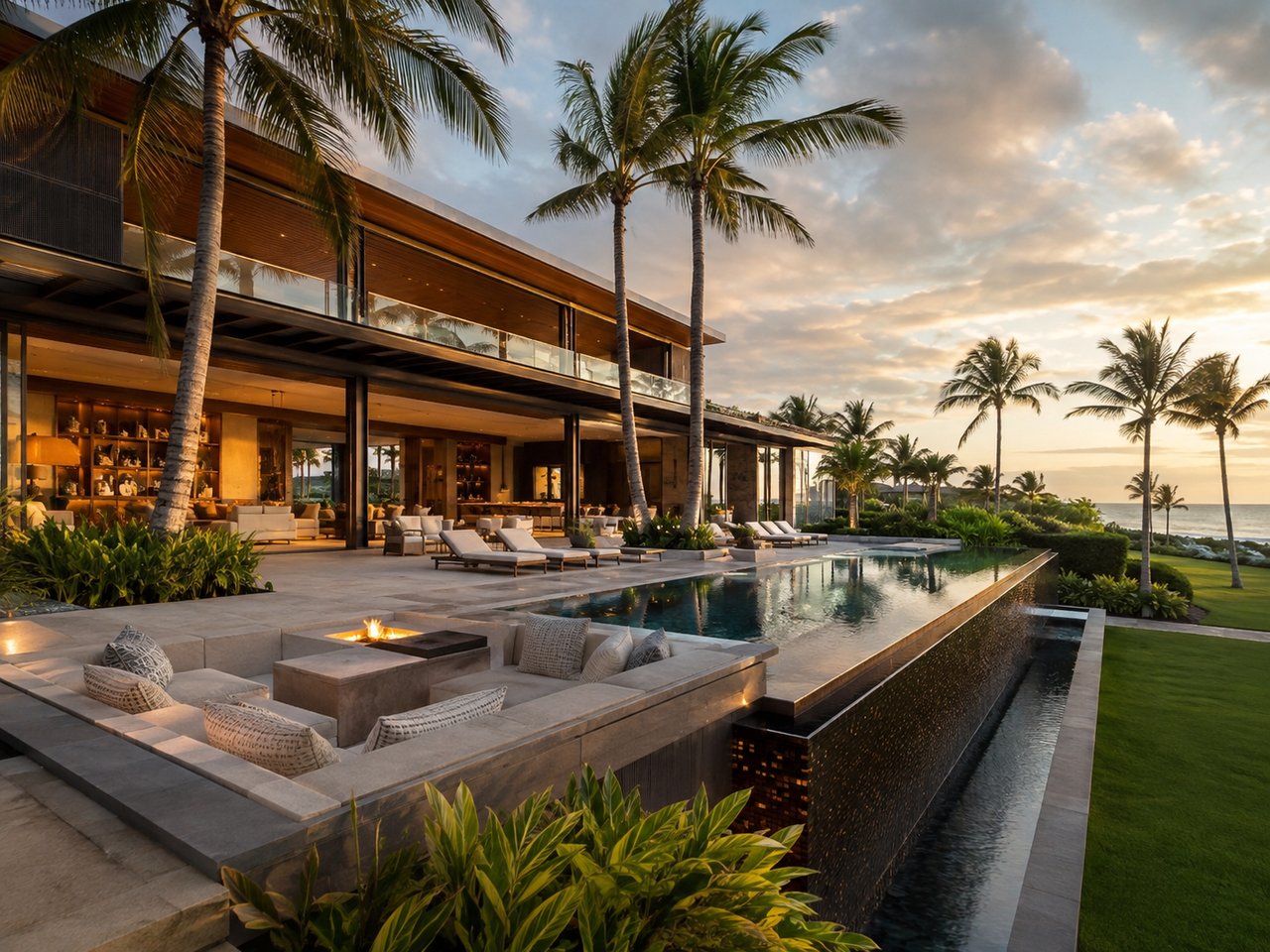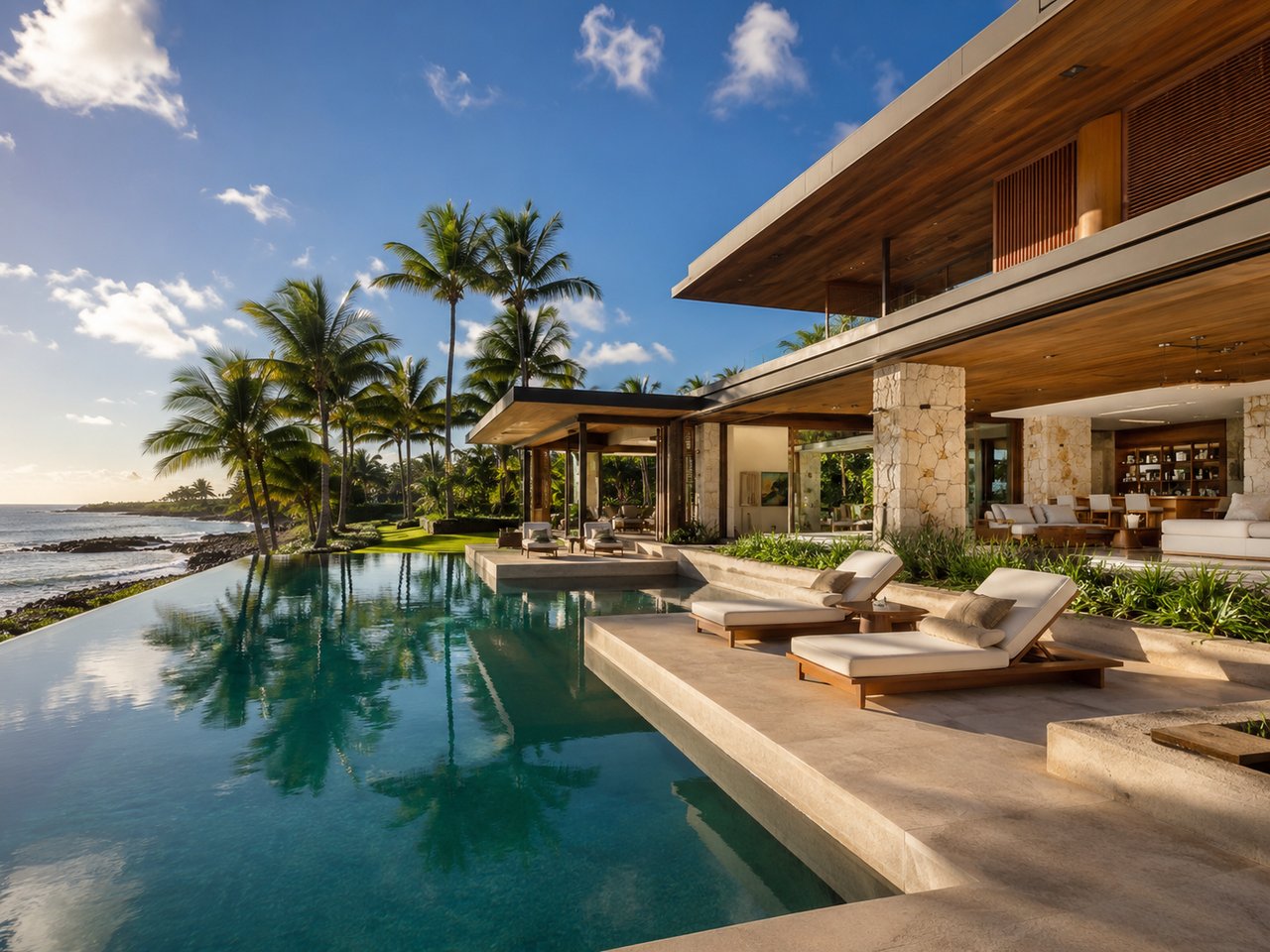
The most memorable luxury homes are often defined by what is immediately visible: architecture, views, proportions, materials, pools, gardens, and beautifully appointed interiors. Yet some of the qualities that make a residence genuinely exceptional are almost invisible.
Service infrastructure is one of them.
In a sophisticated residence, kitchens need to function efficiently, deliveries need a logical point of arrival, household staff need practical circulation, storage needs to be sufficient, mechanical systems require access, and entertaining spaces need to operate without disrupting private areas of the home. When these functions have been carefully considered, the result feels effortless. When they have not, even an extraordinary property can become less comfortable to operate.
This distinction becomes particularly relevant in the luxury market, where residences are often larger, more complex, and more frequently used for entertaining than conventional homes. A principal residence may accommodate household staff and frequent guests. A second home may need to be managed while its owners are away. A property used for extended family gatherings may require significant storage, catering, maintenance, and logistical capacity.
For discerning buyers in Puerto Rico, understanding how a residence functions behind the scenes can therefore be just as important as evaluating its public-facing spaces. WoodsLux Puerto Rico looks beyond presentation to consider the operational qualities that support a refined residential experience.
True luxury is not only what guests see.
It is also how effortlessly everything works when they are not looking.
1. The Difference Between a Beautiful Home and a Well-Run Home
Luxury real estate is frequently marketed through visual impact.
A dramatic entrance creates an immediate impression. A panoramic terrace communicates lifestyle. A designer kitchen signals sophistication. A resort-style pool suggests leisure.
These elements matter.
But a residence can photograph beautifully while functioning inefficiently.
Perhaps the kitchen has impressive finishes but inadequate secondary storage. Perhaps the main entrance is elegant but there is no discreet location for deliveries. Maybe the laundry facilities are too far from the bedrooms, or maintenance equipment has no dedicated storage. A large entertaining area may look exceptional while lacking the operational support necessary for frequent events.
These issues rarely appear in marketing photography.
They become apparent through ownership.
A truly sophisticated home separates different types of residential activity without making the distinctions feel cumbersome.
Family life should have its private areas. Guests should have intuitive access to entertaining spaces. Household staff should be able to perform their responsibilities efficiently. Maintenance teams should have practical access to equipment and exterior areas. Deliveries should not necessarily need to cross the principal living environment.
The objective is not to make a residence feel commercial or institutional.
Quite the opposite.
Good service design allows the visible areas of a home to remain calm, uncluttered, and residential because the operational functions have been intelligently integrated elsewhere.
This is one of the defining differences between luxury as appearance and luxury as experience.
2. The Secondary Kitchen Can Be More Valuable Than It Appears
One of the clearest examples of invisible luxury is the relationship between the principal kitchen and its supporting spaces.
A beautifully designed kitchen may serve as the social heart of a residence. Guests gather around the island, family members prepare meals together, and the space becomes part of the home's entertaining experience.
But frequent entertaining can create a practical problem.
Where do preparation, storage, catering equipment, dishes, packaging, and cleanup happen when the main kitchen is also being used as a social space?
A secondary or service kitchen can provide an answer.
Depending on the residence, this area may include additional refrigeration, preparation surfaces, pantry storage, sinks, dishwashing capacity, and space for catering operations. It can allow the principal kitchen to remain visually composed while supporting the more demanding aspects of entertaining behind the scenes.
For buyers who regularly host guests, this distinction can be significant.
The concept is not about having more appliances simply for the sake of having more. It is about separating presentation from operation.
A well-designed kitchen ecosystem can allow a homeowner to host a dinner, celebration, or extended family gathering without turning the primary living environment into a workspace.
This can be particularly relevant in Puerto Rico, where indoor and outdoor entertaining frequently overlap. Food may move from an interior kitchen to a terrace, pool area, outdoor kitchen, or covered pavilion.
The more ambitious the entertaining program, the more important the supporting infrastructure becomes.
When evaluating a luxury property, buyers should therefore ask not only, "How beautiful is the kitchen?"
They should also ask, "How does this kitchen function when the house is full?"
3. Circulation Should Protect Privacy and Improve Efficiency
Circulation is one of the least visible aspects of residential design, but it can have a major influence on daily life.
In a well-planned luxury residence, different users can move through the property without constantly crossing paths.
Owners, guests, household staff, maintenance professionals, and deliveries may all have different needs.
A sophisticated floor plan considers these movements.
For example, a residence may have a primary arrival sequence for homeowners and guests while providing a more discreet route for service access. A guest entering for dinner should not necessarily pass through laundry or storage areas. Maintenance personnel may need access to mechanical rooms, gardens, pool equipment, or exterior systems without entering private interior zones.
This does not require an unnecessarily complicated floor plan.
It requires clarity.
The strongest residential circulation systems feel intuitive because they are designed around how people actually use the property.
Privacy is an important part of this equation.
A household may employ staff, receive regular deliveries, or have contractors visiting for maintenance. The ability to accommodate those activities without disrupting family life can significantly improve the sense of ease within a residence.
For HNWIs and UHNWIs, this can be especially relevant when a property functions as both a private retreat and an entertaining venue.
The ideal arrangement allows the residence to accommodate multiple levels of activity simultaneously.
The owner can be relaxing upstairs.
Guests can be enjoying the terrace.
A meal can be prepared.
A delivery can arrive.
And maintenance can take place.
None of these activities should necessarily interfere with the others.
That is operational luxury.
4. Storage Is an Essential Luxury, Not an Afterthought
Storage is often underestimated because it is rarely photographed.
Yet the amount, location, and quality of storage can determine whether a luxury residence remains visually composed.
Large homes require substantial supporting infrastructure.
Outdoor furniture, linens, luggage, seasonal equipment, sporting equipment, beach accessories, cleaning supplies, entertaining pieces, wine collections, household supplies, and maintenance materials all require appropriate locations.
Without adequate storage, these items gradually migrate into visible areas.
A beautiful garage becomes crowded. A terrace becomes a staging area. Closets become difficult to use. Utility rooms become overloaded.
The residence may still be architecturally impressive, but its daily experience becomes less refined.
Well-designed storage addresses this problem by giving different categories of belongings their own logical places.
A large walk-in wardrobe may support the primary suite. A dedicated luggage room may be valuable for frequent travelers. Pool and beach equipment can have an exterior storage solution near the relevant areas. Wine storage may require specific environmental conditions. Household supplies may be separated from guest-facing areas.
The principle is simple:
Luxury requires room for the life that comes with it.
This is particularly important when evaluating properties with substantial entertaining capacity.
A residence designed for twenty guests should have the operational infrastructure to support those guests. Otherwise, the scale of the architecture may exceed the practicality of the home.
At WoodsLux Puerto Rico, storage is therefore part of the broader question of functionality. The objective is to understand whether the property can remain elegant not only on the day of a showing, but throughout years of ownership.
5. Back-of-House Design Supports the Front-of-House Experience
The phrase "back of house" is often associated with hospitality, but the concept can be equally relevant to sophisticated private residences.
It refers to the areas that support the visible living environment without necessarily being part of it.
These can include:
- Service kitchens
- Laundry facilities
- Staff areas
- Utility rooms
- Storage
- Mechanical spaces
- Delivery areas
- Maintenance access
- Pool equipment
- Garden support areas
- Waste and recycling zones
In an exceptionally well-designed home, these functions are integrated into the architecture without dominating it.
This is particularly important for properties that employ household staff.
A residence with dedicated staff accommodations, practical service circulation, and appropriate work areas can operate more efficiently than one where staff must constantly navigate through principal living spaces.
The same principle applies to maintenance.
A tropical property may require significant landscape, pool, exterior, and mechanical maintenance. Equipment must be accessible. Supplies need appropriate storage. Technicians need practical routes to systems.
When these requirements have been considered from the beginning, maintenance can occur with minimal disruption.
This is one reason luxury buyers should examine utility and service areas during a property tour rather than treating them as secondary.
The spaces guests rarely see can tell an experienced observer a great deal about the quality of the original planning.
A residence with excellent public spaces but inadequate back-of-house infrastructure may require compromises.
A residence where both have been carefully considered often feels noticeably more effortless.
6. Service Infrastructure Becomes Even More Important in Second Homes
Puerto Rico attracts buyers who may use a property as a primary residence, seasonal home, investment property, or private retreat.
For second-home owners, operational design can become particularly valuable.
A residence that sits unoccupied for periods of time still needs to function.
Landscaping must be maintained. Pools require attention. Mechanical systems need monitoring. Deliveries may need to be received. Repairs may need to be coordinated. Household inventories may need to be managed.
Owners who travel frequently may therefore place considerable value on properties that are straightforward to operate in their absence.
This does not mean a property needs to be technologically complex.
It means the infrastructure should be accessible, organized, and manageable.
Dedicated utility areas, practical maintenance access, sufficient storage, and clear service circulation can reduce friction for property managers and household personnel.
For an owner returning after several weeks away, that can translate into a much more seamless arrival experience.
The house is ready.
The gardens are maintained.
The pool is prepared.
The entertaining areas can be opened.
The owner does not have to rediscover how the property functions every time they return.
This operational simplicity can be an understated but meaningful component of luxury.
It also reinforces an important principle for second-home buyers: the best property is not necessarily the one with the most features.
It may be the one whose features can be managed most effectively.
7. How Buyers Should Evaluate a Luxury Home's Operational Design
When viewing a luxury residence, buyers often move quickly through the spaces that appear most impressive.
A more sophisticated evaluation also includes the areas that support those spaces.
Examine the kitchen ecosystem
Look for pantry capacity, secondary preparation areas, refrigeration, storage, dishwashing, and the relationship between kitchen and entertaining spaces.
Inspect service access
Ask how deliveries, contractors, household staff, and maintenance personnel move through the property.
Evaluate storage realistically
Consider the size of the residence and the lifestyle it is designed to support. Does the available storage correspond with the property's scale?
Visit utility spaces
Mechanical rooms, laundry areas, electrical infrastructure, pool equipment, and other service spaces should be accessible and logically organized.
Consider staff requirements
If the household employs staff, determine whether the residence provides practical working conditions and appropriate circulation.
Examine outdoor operations
Pools, gardens, terraces, outdoor kitchens, and landscaping all require maintenance. Ask how those functions are supported.
Think about the property when it is fully occupied
Imagine a major family gathering or dinner party. Where do deliveries arrive? Where is food prepared? Where are supplies stored? How does cleanup occur?
Consider the property while the owners are away
If the residence is a second home, ask how easily it can be monitored and maintained without the owners being present.
These questions transform a property tour from a visual exercise into a functional assessment.
For discerning buyers, that distinction can be invaluable.
WoodsLux Puerto Rico approaches luxury property selection with this broader perspective: architecture and aesthetics matter, but so do the systems and spaces that allow those qualities to remain enjoyable over time.
Conclusion
The highest level of residential luxury is often experienced through the absence of friction.
A guest arrives without encountering operational clutter. A dinner can be prepared without overwhelming the principal kitchen. Household staff can work efficiently without disrupting private areas. Maintenance can take place without turning the home into a worksite. A second home can remain prepared and manageable even when its owners are elsewhere.
None of these qualities necessarily announces itself.
That is precisely why they matter.
Service infrastructure is the architecture behind the architecture. It supports the visible beauty of a residence while allowing daily life to unfold with greater ease.
For buyers exploring luxury real estate in Puerto Rico, evaluating these qualities can reveal important differences between properties that appear similar on paper. Two residences may offer comparable views, bedroom counts, and amenities while providing very different ownership experiences.
The distinction often lies in the details.
At WoodsLux Puerto Rico, understanding those details is part of advising buyers who expect more from a luxury residence than impressive presentation. The objective is to identify homes where design, lifestyle, privacy, functionality, and operational intelligence work together.
Because true luxury is not simply having extraordinary spaces.
It is having a home in which extraordinary spaces work effortlessly.
FAQ
What is service infrastructure in a luxury home?
Service infrastructure includes the spaces and systems that support daily operations, such as kitchens, storage, laundry, utility areas, maintenance access, and service circulation.
Why is back-of-house design important in luxury real estate?
Well-designed service areas allow staff, deliveries, maintenance, and household operations to function efficiently without disrupting private or guest-facing spaces.
Does a luxury home need a secondary kitchen?
Not every residence requires one, but a secondary kitchen can be valuable for buyers who frequently entertain or need additional preparation, storage, and catering capacity.
Why is storage important in a large luxury residence?
Adequate storage helps keep living spaces organized and uncluttered while accommodating luggage, outdoor equipment, household supplies, entertaining items, and other belongings.
Is service infrastructure important for second homes?
Yes. Practical service and maintenance areas can make it easier to manage a second residence when the owners are traveling or away for extended periods.
Should buyers inspect utility and service areas during a property tour?
Yes. These spaces can reveal how thoughtfully a residence was designed and whether its operational infrastructure is appropriate for the property's scale and intended lifestyle.
Does better operational design increase property value?
Operational design can strengthen a property's functionality and lifestyle appeal, but it should be considered alongside location, architecture, condition, amenities, market demand, and other valuation factors.