In exceptional residential architecture, light is rarely treated as a secondary detail. It is part of the architecture itself—shaping how rooms feel, how materials are perceived, and how a residence connects with its surroundings.
This becomes particularly significant in Puerto Rico, where the relationship between architecture and the tropical environment can define the character of a home. Sunlight, ocean horizons, vegetation, courtyards, shaded terraces, and open-air living spaces create opportunities for residences that feel connected to nature without compromising sophistication or comfort.
For luxury buyers, natural light is more than an aesthetic preference. It can influence the atmosphere of a residence, the functionality of its spaces, and the way architectural details are experienced throughout the day. A marble surface may reveal different tones in morning light than in the afternoon. A living room may transition from bright and expansive to intimate and atmospheric as the sun moves across the property.
The most successful luxury homes do not simply maximize the amount of glass or sunlight. They control light intelligently. Orientation, shading, window placement, ceiling heights, landscaping, materials, and outdoor spaces all contribute to a carefully calibrated residential experience.
At WoodsLux Puerto Rico, this distinction matters when evaluating properties for discerning buyers. The question is not simply whether a home is bright. It is whether the architecture uses natural light thoughtfully to create a residence that is beautiful, comfortable, and appropriate to its environment.
1. Why Natural Light Matters in Luxury Residential Architecture
Natural light has an unusual role in architecture because it is both functional and experiential.
At a practical level, daylight can reduce the need for artificial illumination during portions of the day. More importantly, however, it changes the perception of space.
A room with well-positioned natural light can appear more open, layered, and connected to its surroundings. Light can emphasize architectural proportions, draw attention to artwork, highlight natural materials, and create visual continuity between interior and exterior spaces.
In luxury residences, these effects become particularly valuable because high-end architecture often depends on subtle details.
Consider a residence with stone walls, custom millwork, sculptural staircases, textured plaster, or carefully selected wood. Under flat or poorly distributed lighting, these elements may lose some of their visual depth. Under carefully controlled daylight, their textures and tonal variations can become part of the home's character.
Natural light also influences how spaces are used.
A breakfast area with soft morning light can have a very different atmosphere from a formal dining room designed for evening entertaining. A home office may benefit from balanced daylight without excessive glare. A gallery-like corridor may use narrow openings to create a sequence of light and shadow.
This is why sophisticated residential design does not necessarily pursue maximum brightness.
Instead, it seeks appropriate light for each space.
For buyers evaluating luxury real estate in Puerto Rico, this distinction can reveal qualities that are not always obvious in listing photography. Professional photographs are generally captured under carefully selected conditions. A private showing allows a buyer to understand how the property actually responds to changing daylight.
That experience can be revealing.
2. Orientation Is One of the Most Important Design Decisions
Before considering windows, finishes, or decorative elements, architects must understand the orientation of a residence.
The movement of the sun affects how different sides of a property receive light throughout the day. Orientation therefore influences not only brightness but also heat, glare, views, and the relationship between indoor and outdoor spaces.
A thoughtfully oriented home can use its site to create distinct experiences.
Morning light may be welcomed into bedrooms or breakfast areas. More controlled illumination can be introduced into living spaces later in the day. Covered terraces can provide outdoor areas that remain visually bright while reducing direct exposure to intense sunlight.
This is where site-specific architecture becomes particularly important.
A luxury residence should respond to its actual parcel rather than rely on a generic formula.
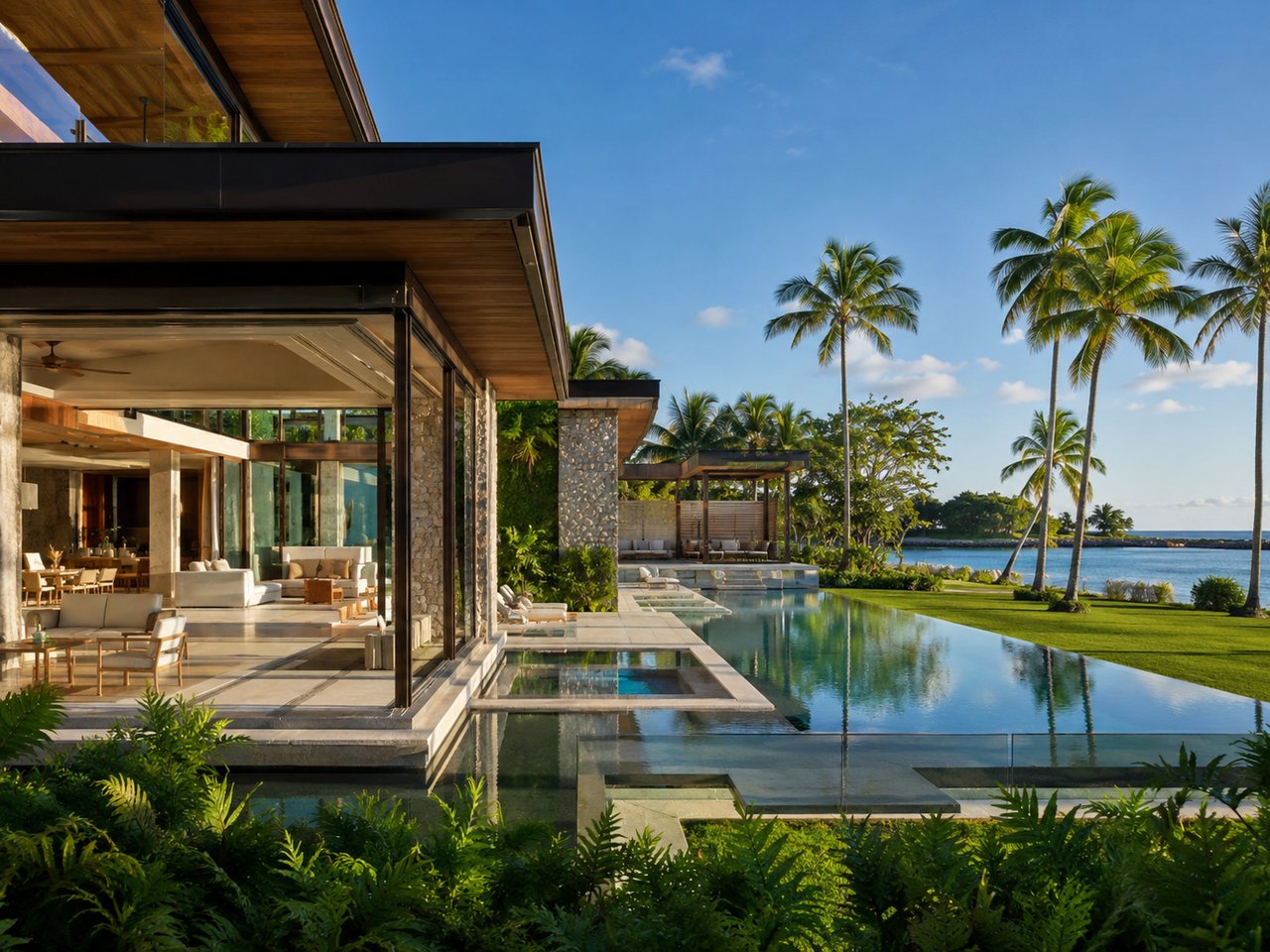
A coastal property, for example, may be designed to capture expansive views while using overhangs, recessed glazing, vegetation, or other architectural strategies to manage exposure. A residence surrounded by mature tropical landscaping may use filtered light as part of its aesthetic identity.
Topography can also influence the equation.
A property positioned above its surroundings may receive different light conditions from a residence enclosed by vegetation or neighboring structures. Elevation, terrain, and the orientation of adjacent buildings all affect the final experience.
For buyers, this means that the phrase "abundant natural light" should be evaluated in context.
Where does the light come from?
At what time of day?
How direct is it?
What happens when the sun moves?
And how does the architecture control it?
These questions provide a much more meaningful understanding of the property than simply counting windows.
3. The Relationship Between Glass, Views, and Comfort
Large expanses of glass have become closely associated with contemporary luxury architecture.
Floor-to-ceiling windows can frame ocean views, gardens, mountains, pools, and dramatic landscapes. When thoughtfully designed, they can make the boundary between indoors and outdoors feel almost invisible.
But more glass does not automatically create better architecture.
The placement and performance of glazing matter considerably.
A large window facing an exceptional private view can become a defining architectural feature. The same amount of glass facing an unattractive neighboring structure may provide little value.
Glazing can also introduce practical considerations involving glare and heat. In a tropical climate, these issues require thoughtful design rather than simply maximizing transparency.
Architectural solutions may include:
- Deep roof overhangs
- Recessed windows
- Covered terraces
- Exterior screens
- Strategic vegetation
- Shaded courtyards
- Selective rather than continuous glazing
- Carefully positioned openings
The goal is to create a relationship with daylight that feels intentional.
This is one reason luxury architecture often combines transparent and solid elements rather than treating every exterior wall as an opportunity for glass.
A solid wall can create intimacy. A narrow opening can frame a specific view. A courtyard can bring daylight into the center of the residence. A shaded terrace can provide outdoor living without excessive direct exposure.
The resulting architecture can feel more sophisticated precisely because it does not attempt to reveal everything at once.
For a discerning buyer, this balance can be an important indicator of design quality.
4. Light and Shadow Can Define the Character of a Home
Luxury is often associated with brightness, but some of the most compelling residences are defined by contrast.
Light needs shadow to create depth.
A covered walkway leading toward a bright courtyard can create a dramatic transition. A shaded entrance can make the living areas beyond feel more luminous. A bedroom with controlled morning light can feel calmer than a room exposed to direct sunlight throughout the day.
This interplay is especially powerful in tropical architecture.
Rather than treating sunlight as something to eliminate or maximize, designers can use it as a material. The movement of light across floors and walls becomes part of the home's visual identity.
Consider how natural materials respond to changing conditions.
Wood can appear warmer as sunlight moves across its surface. Stone can reveal different textures under angled light. Water can reflect light into adjacent interiors. Textured walls can produce subtle shadows that change throughout the day.
These effects cannot be fully replicated through artificial lighting.
They are part of what makes a residence feel connected to its place.
For buyers touring a luxury property, it can therefore be worthwhile to look beyond the brightest room.
Pay attention to transitions.
How does the entrance feel compared with the living room? Does the home create moments of compression and expansion? Are bedrooms protected from excessive exposure? Do corridors receive enough light to feel purposeful? Does the architecture create visual connections between interior spaces and gardens or terraces?
These details can distinguish a thoughtfully designed residence from one that simply has large windows.
5. Outdoor Living Depends on the Quality of Light
In Puerto Rico luxury real estate, outdoor living is often central to the residential experience.
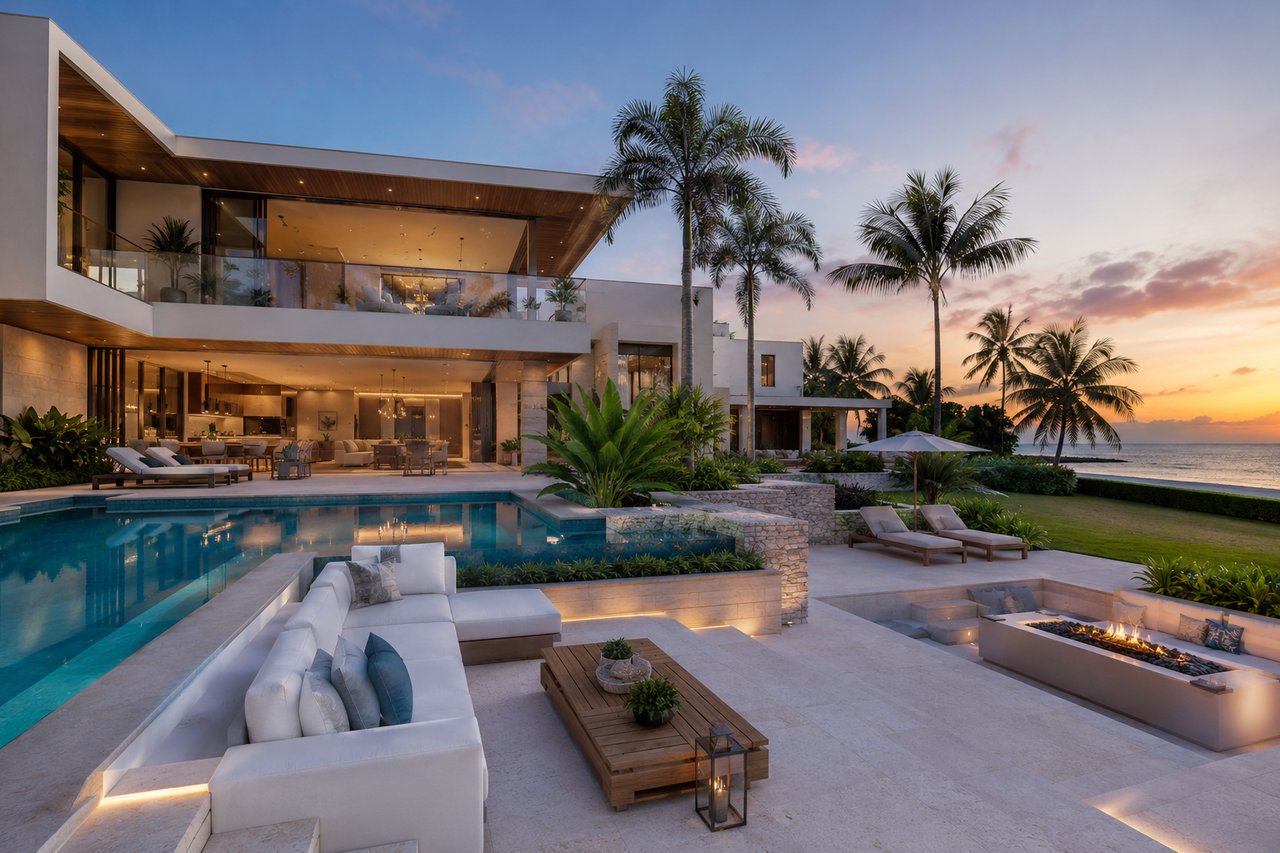
Terraces, pools, gardens, outdoor kitchens, covered lounges, and entertaining areas can function as extensions of the interior. Their success depends heavily on how the property manages sunlight.
A terrace exposed to intense direct sun throughout the day may be visually spectacular but less comfortable for extended use. A carefully shaded outdoor room, by contrast, can provide a more versatile setting for dining, entertaining, or relaxing.
The best properties often create several outdoor environments rather than one large open space.
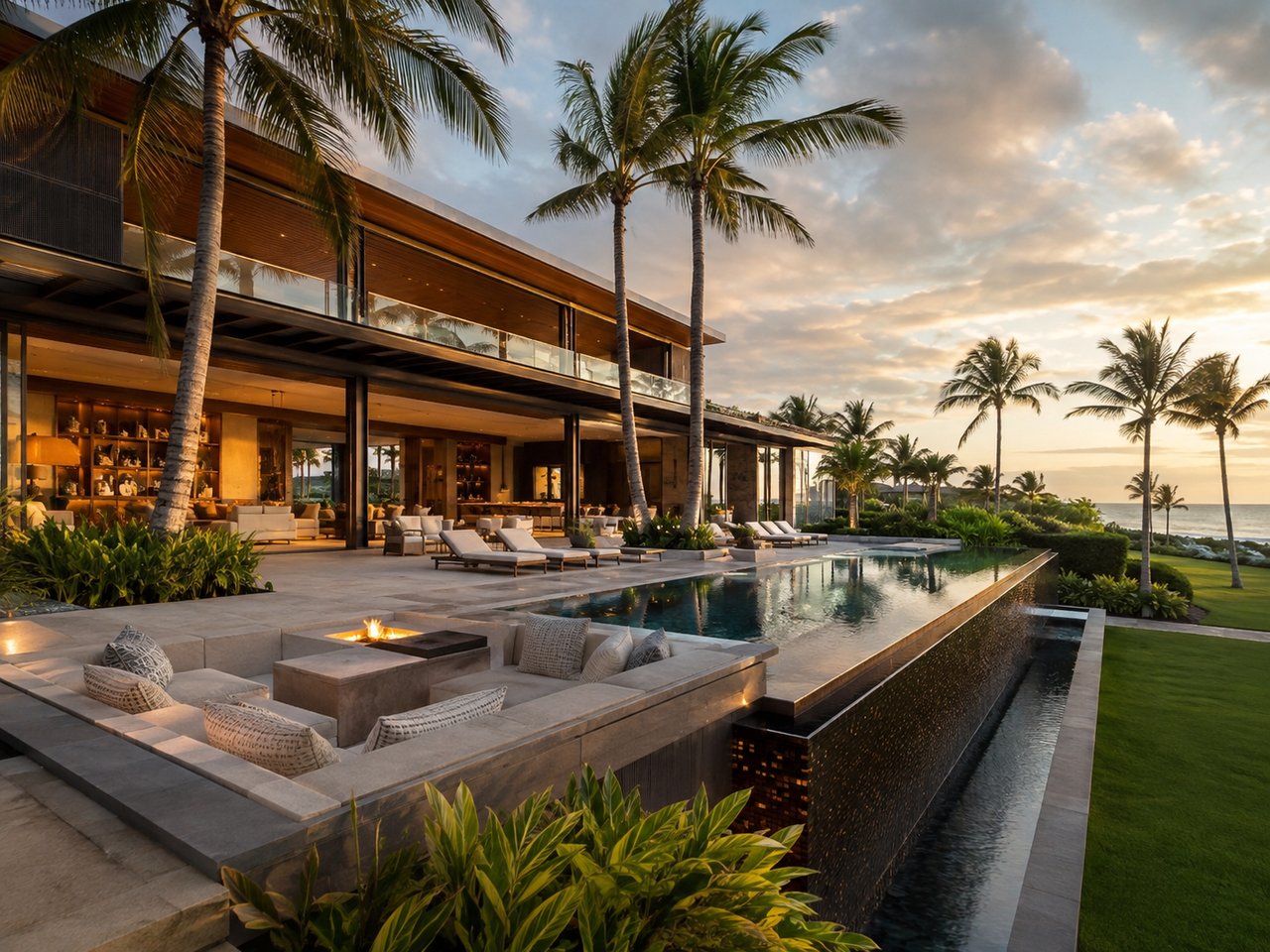
One area may capture early morning light. Another may provide afternoon shade. A pool terrace may be designed for openness, while a covered pavilion offers a more intimate retreat.
This layering creates flexibility.
It also allows the residence to respond to changing weather and daily routines.
Landscaping plays an important role here. Trees, palms, planted screens, and carefully positioned vegetation can filter sunlight while reinforcing privacy and visual connection to nature.
Water can also become part of the light strategy.
Pools and reflecting surfaces can introduce movement and brightness into adjacent spaces, particularly when architecture is designed to capture those reflections.
The result is a form of indoor-outdoor living that feels intentional rather than simply open.
For luxury buyers, the value is experiential. A residence may have impressive square footage, but the quality of its outdoor spaces can determine how much of that architecture is actually enjoyed.
6. Natural Light Can Influence the Perception of Luxury Materials
High-end materials are selected for more than durability.
Their color, texture, scale, and craftsmanship contribute to the identity of a residence. Natural light can dramatically influence how those characteristics are perceived.
A pale stone may appear crisp and cool under one lighting condition and warmer under another. Timber can reveal grain and tonal variation as daylight changes. Metallic finishes may reflect light subtly, while textured plaster can produce gradients of shadow across a wall.
This is particularly important in minimalist luxury architecture.
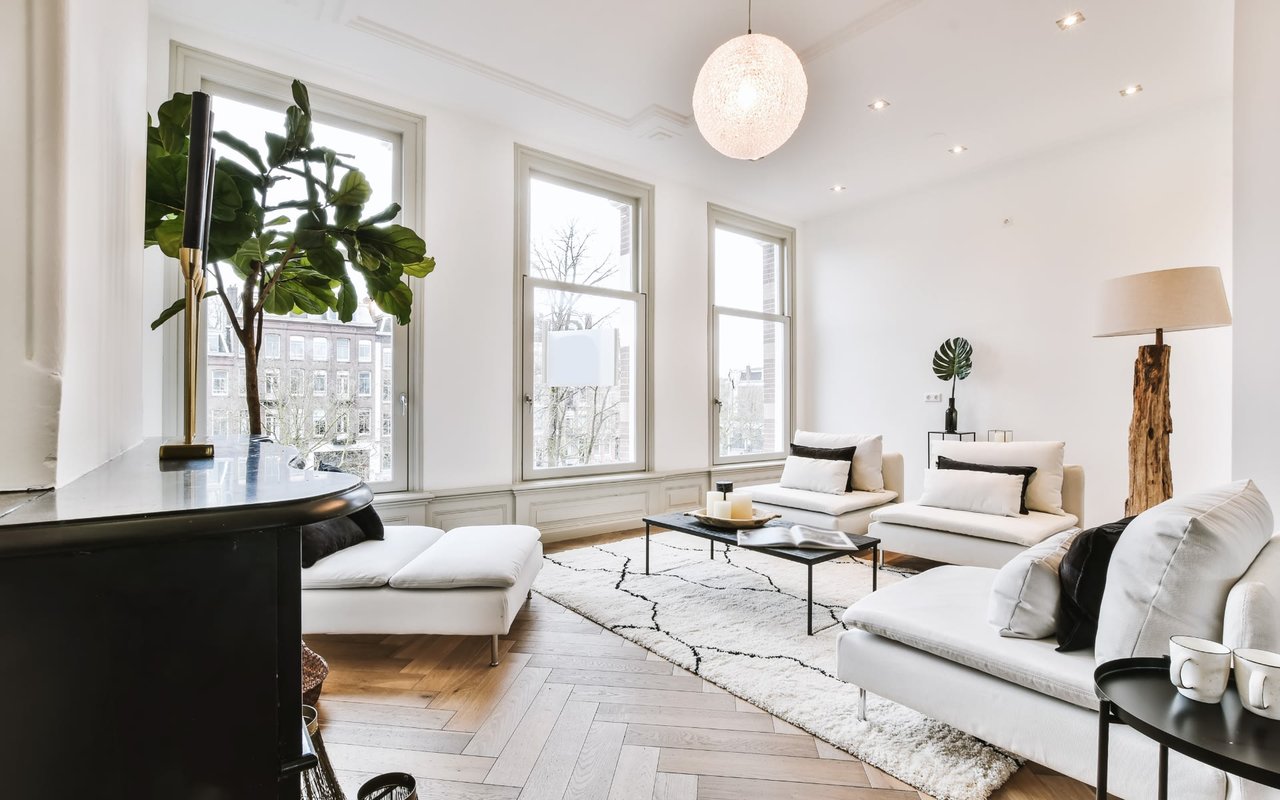
When interiors are restrained, there are fewer decorative elements competing for attention. Light, proportion, texture, and material become the principal sources of visual richness.
A well-designed residence can therefore feel luxurious without relying on excessive ornamentation.
Light does part of the work.
This also means buyers should examine material quality under different conditions.
A polished stone floor that looks striking in bright daylight may behave differently at sunset. A dark interior can feel dramatic when balanced by controlled daylight but oppressive if natural illumination is insufficient.
The objective is not to favor light or dark finishes universally. It is to understand how the architecture, materials, and daylight work together.
For buyers considering a renovation, this perspective can also be useful. Changing a property's lighting strategy may sometimes have a greater visual effect than adding decorative features.
A new opening, improved shading solution, courtyard intervention, or revised interior layout can potentially transform the experience of an existing residence.
Any such modification, of course, should be evaluated with qualified architectural and engineering professionals and in accordance with applicable requirements.
7. How Buyers Can Evaluate Natural Light During a Property Search
Natural light is one of the easiest qualities to overlook during a fast property tour.
A residence may feel impressive during a short showing, but buyers should take time to understand how daylight actually interacts with the property.
Visit at different times when possible
Morning and afternoon conditions can reveal very different characteristics. If natural light is important to your decision, consider requesting a second viewing at another time of day.
Look beyond the main living room
Examine bedrooms, bathrooms, hallways, staircases, kitchens, offices, and secondary living spaces. A home should be evaluated as a complete environment.
Observe glare
A bright room is not necessarily a comfortable room. Look at television areas, workspaces, dining tables, and other locations where excessive glare could become inconvenient.
Examine the relationship with exterior spaces
Look at how terraces, gardens, pools, and courtyards contribute to the interior experience. The strongest properties often create visual continuity between these areas.
Study shading
Look for overhangs, covered terraces, vegetation, recessed windows, and other strategies that control direct exposure.
Consider the surrounding environment
Future construction, neighboring buildings, mature vegetation, and topography can influence the amount and quality of daylight reaching the property.
Pay attention to atmosphere
Finally, trust the experience—but analyze it.
Does the home feel calm, open, intimate, dramatic, or balanced? Does the atmosphere change naturally as you move through different rooms?
These observations can help buyers distinguish between a property that simply receives daylight and one that has been designed around it.
WoodsLux Puerto Rico considers these experiential details alongside the more conventional factors of luxury property evaluation. For discerning buyers, the objective is to understand not only what a residence contains, but how it lives.
Conclusion
Natural light is one of the quietest expressions of luxury architecture.
It does not appear as a conventional amenity, yet it can influence nearly every aspect of how a residence is experienced—from the atmosphere of a bedroom in the morning to the way a stone wall changes at sunset.
In Puerto Rico, where architecture has an extraordinary opportunity to engage with tropical landscapes, daylight can become one of the defining elements of residential design.
The most successful luxury homes do not simply invite sunlight inside. They shape it.
Orientation, glazing, shading, landscaping, courtyards, materials, and outdoor spaces work together to create an environment that changes throughout the day while remaining comfortable and purposeful.
For buyers, recognizing this requires looking beyond photographs and specifications. It means experiencing the property at different times, examining how light moves through its spaces, and understanding how the architecture responds to its particular site.
That level of observation can reveal qualities that are difficult to capture in a listing description but immediately apparent once experienced in person.
At WoodsLux Puerto Rico, this is part of the broader approach to luxury real estate: evaluating residences not simply for what they offer on paper, but for the quality, design, setting, and long-term experience they can provide.
In exceptional homes, light is not merely something that enters through a window.
It is part of the architecture.
FAQ
Why is natural light important in luxury homes?
Natural light can influence the atmosphere, perceived proportions, material appearance, and connection between interior and exterior spaces, making it an important architectural consideration.
Does more glass always make a luxury home better?
Not necessarily. High-quality residential design balances views and daylight with shading, comfort, privacy, glare control, and the property's specific orientation.
How does tropical architecture manage strong sunlight?
Tropical architecture may use overhangs, recessed glazing, shaded terraces, landscaping, courtyards, and carefully positioned openings to control direct exposure while maintaining natural light.
Should buyers view a luxury home at different times of day?
Yes. Morning, midday, and afternoon conditions can reveal different levels of brightness, glare, shade, views, and overall atmosphere throughout the residence.
Can landscaping improve natural light?
Landscaping can filter direct sunlight, create shade, and influence how light enters outdoor and interior spaces. Mature vegetation can also contribute to the property's visual character.
How does natural light affect luxury materials?
Daylight can reveal texture, grain, color, and tonal variations in materials such as stone, wood, plaster, and metal, adding depth to sophisticated interiors.
Can natural light influence a property's market appeal?
It can contribute to the overall lifestyle and architectural appeal of a residence, although property value depends on many factors including location, design, condition, demand, and market conditions.