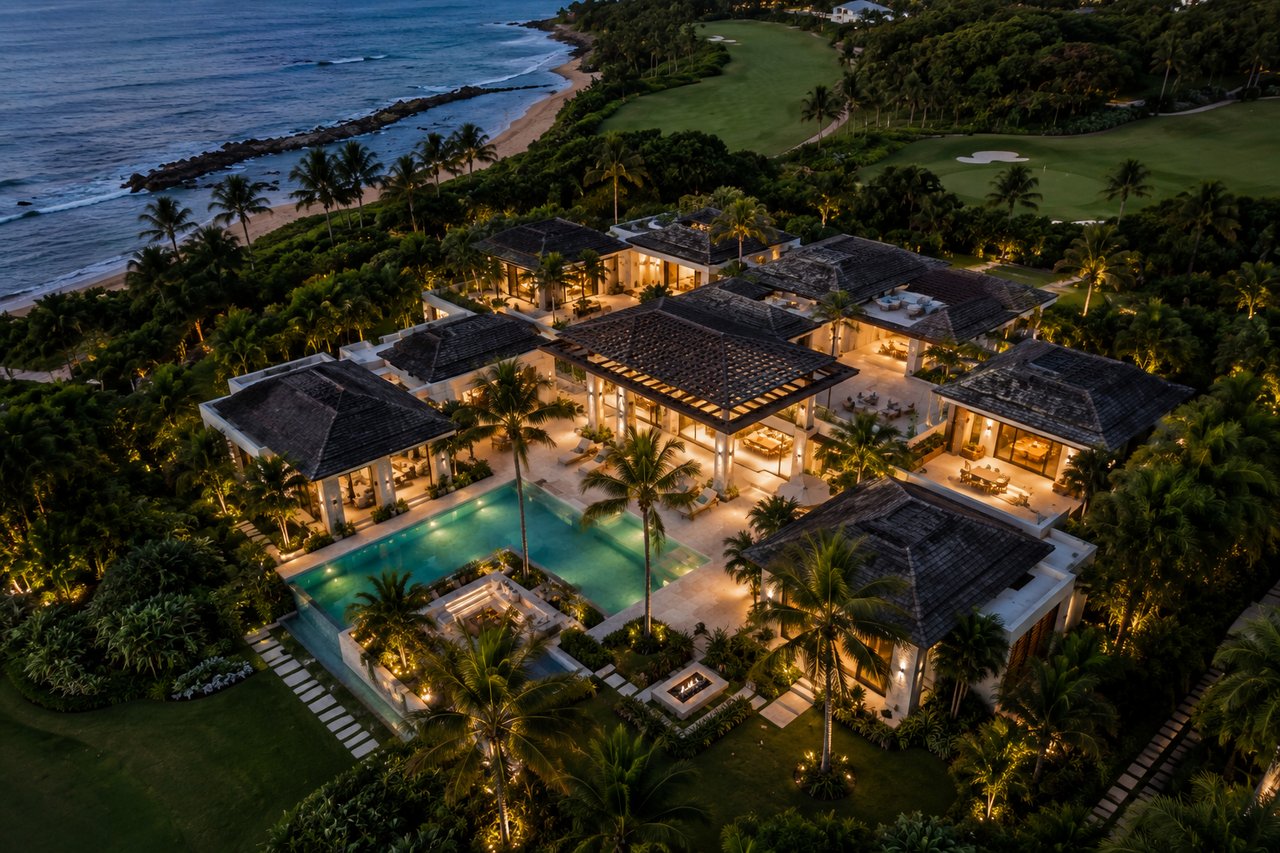
In 2026, high‑net‑worth investors are rethinking portfolio construction.
Volatile equity markets, compressed bond yields, and global uncertainty have led many serious investors to reassess the role of tangible assets within their long‑term wealth strategy.
One allocation trend is becoming increasingly clear:
Investors are shifting capital from traditional financial instruments into luxury real estate — particularly in Puerto Rico.
At WoodsLux Puerto Rico, we regularly advise investors who are reallocating portions of their portfolios into prime property across the island. For many, this is not about speculation. It is about control, scarcity, jurisdictional positioning, and lifestyle integration.
Here’s why the shift is happening.
The Limitations of Traditional Investments in 2026
Traditional investments — equities, bonds, and mutual funds — remain foundational to most portfolios. However, they come with structural characteristics that some investors are seeking to balance:
- Market volatility
- Liquidity-driven pricing swings
- Correlation risk during downturns
- Limited control over asset performance
Public markets react quickly to macroeconomic shifts. For long-term investors, that volatility can create both opportunity and stress.
Luxury real estate, by contrast, often behaves differently.
Why Luxury Real Estate Appeals to Sophisticated Investors
High-end real estate offers characteristics that differ from traditional securities:
1. Tangible Asset Backing
Luxury property is a physical, finite asset — especially when oceanfront or located in established gated communities.
2. Scarcity-Driven Value
Unlike stocks, prime real estate supply cannot be expanded at will.
3. Lifestyle Integration
Investors can use the asset personally while it appreciates over time.
4. Inflation Hedge Potential
Hard assets historically provide resilience during inflationary cycles.
At WoodsLux, many investors describe luxury property as both a wealth preservation tool and a quality-of-life upgrade.
Why Puerto Rico Specifically?
Luxury real estate exists worldwide. But Puerto Rico offers unique positioning in 2026.
U.S. Jurisdiction with Distinct Tax Structure
Puerto Rico operates within the U.S. legal system while maintaining a separate local tax framework.
Limited Oceanfront Inventory
Environmental restrictions and geographic constraints limit expansion of prime coastal real estate.
Relocation-Driven Demand
Entrepreneurs, fund managers, and business owners continue relocating for strategic reasons.
Geographic Diversification
For mainland U.S. investors, Puerto Rico provides domestic diversification without leaving U.S. jurisdiction.
At WoodsLux Puerto Rico, we have seen investors treat Puerto Rico property not merely as a purchase — but as a portfolio allocation decision.
Portfolio Allocation Strategy: How Investors Are Structuring Real Estate Exposure
Rather than replacing traditional investments entirely, many high-net-worth individuals are:
- Allocating 10–30% of net worth to real assets
- Prioritizing scarcity-driven prime locations
- Focusing on long-term hold strategies
- Acquiring primary residences aligned with relocation strategy
This approach integrates luxury real estate into a broader wealth plan rather than viewing it as a speculative bet.
Risk Comparison: Real Estate vs Public Markets
No asset class is risk-free.
Luxury real estate risks include:
- Liquidity cycles
- Insurance and infrastructure considerations
- Market selectivity for resale
Public market risks include:
- Rapid valuation swings
- Systemic financial shocks
- Sentiment-driven pricing
Sophisticated investors often diversify across both — balancing liquidity with tangible asset positioning.
Prime Assets vs Secondary Inventory
Not all real estate allocations perform equally.
In Puerto Rico, the properties most aligned with long-term capital preservation typically include:
- True oceanfront estates
- Limited-supply gated communities
- Architecturally distinctive homes
- Infrastructure-resilient properties
Through its advisory model, WoodsLux Puerto Rico helps investors evaluate quality, location, long-term demand drivers, and resale positioning before acquisition.
The Psychological Factor: Control and Stability
Beyond financial metrics, many investors cite an intangible factor:
Control.
Owning a prime luxury property provides:
- Direct decision-making authority
- Physical presence
- Personal utility
- Asset transparency
In uncertain economic climates, that control carries weight.
2026 Outlook: Strategic Allocation Over Speculation
The shift toward Puerto Rico luxury property in 2026 is not driven by hype.
It reflects:
- More disciplined buyers
- Long-term residency positioning
- Mature advisory involvement
- Scarcity recognition
At WoodsLux Puerto Rico, we continue to see investors approach property acquisition as a strategic wealth allocation — not a short-term trade.
Conclusion
Luxury real estate is not replacing traditional investments.
It is complementing them.
For serious investors seeking:
- Tangible asset exposure
- Scarcity-backed positioning
- U.S.-jurisdiction diversification
- Long-term wealth preservation
- Lifestyle integration
Puerto Rico has emerged as a compelling destination.
WoodsLux Puerto Rico works with high-net-worth individuals to evaluate luxury property opportunities, align acquisitions with broader portfolio strategy, and navigate high-end real estate investment across the island.