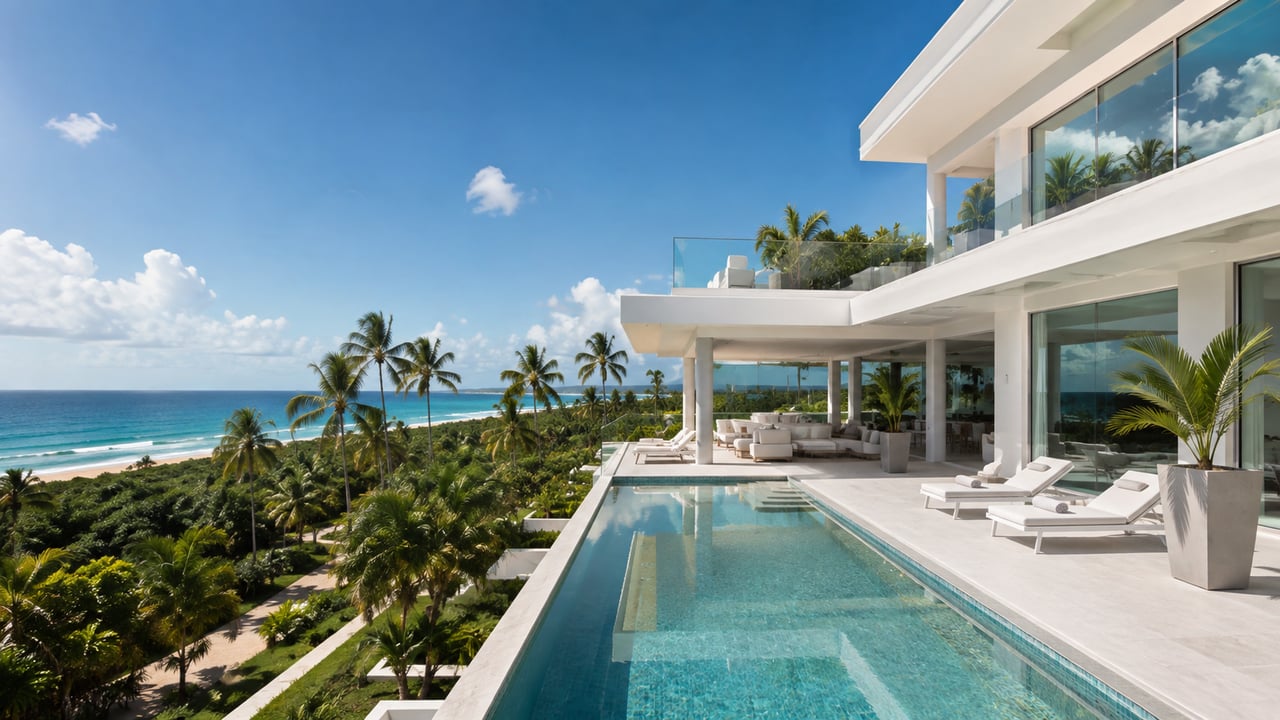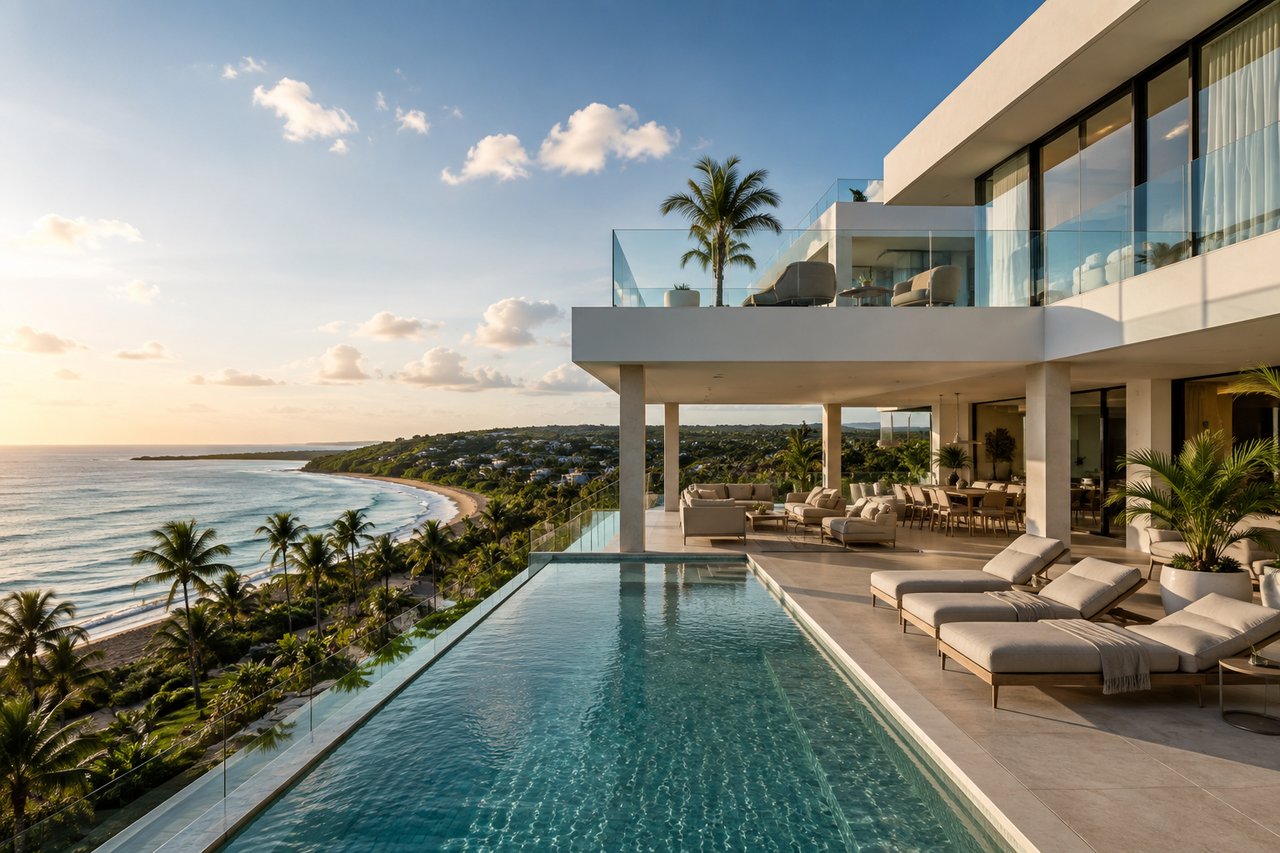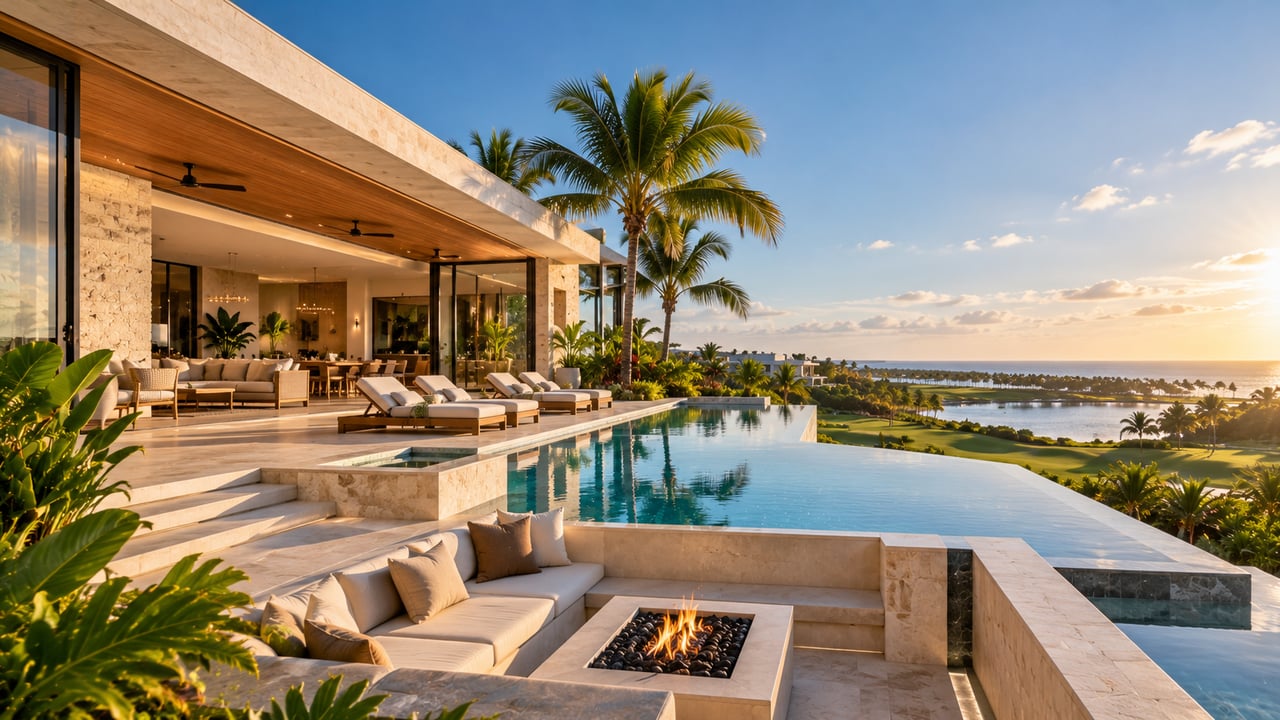
A luxury home can have impressive finishes, generous rooms, and carefully selected materials yet still feel uncomfortable if its natural light and ventilation are poorly suited to the way it is used.
Light affects how rooms appear throughout the day, how colors are perceived, and how connected the interior feels to the outdoors. Ventilation influences air movement, comfort, and the management of indoor moisture. Both are shaped by the building’s orientation, window design, room layout, surrounding structures, and mechanical systems.
In Puerto Rico, buyers should consider these elements in the context of tropical sunlight, humidity, rain, and air-conditioning use. Large windows can create a beautiful visual connection to the outdoors, but they can also introduce glare or unwanted heat depending on their orientation, glazing, shading, and design.
The goal is not to maximize sunlight or open windows at every opportunity. It is to understand how the home manages light, airflow, privacy, and indoor comfort across ordinary daily conditions.
1. Visit the Property at More Than One Time of Day
A single showing provides only a snapshot of the home’s lighting conditions.
A living room that appears bright in the morning may receive direct sun later in the day. A bedroom may feel shaded during an afternoon visit but receive strong early light. The experience depends on the property’s orientation, nearby buildings, landscaping, window placement, and season.
If possible, visit at different times. Observe where direct sunlight falls, which rooms remain naturally bright, and where shadows are created by adjacent structures or mature trees.
Look beyond the main living area. Kitchens, hallways, bathrooms, staircases, and secondary bedrooms can have very different lighting conditions from the rooms featured most prominently in a listing.
Also consider your own routine. If you work from home, the light in your office may matter more than the light in a room you rarely use during the day. If you prefer a dark bedroom for sleeping, strong morning sun may require suitable window treatments.
A careful viewing helps establish whether the property’s natural light supports your lifestyle rather than simply looking attractive in photographs.
2. Understand Window Orientation and Sun Exposure
Window orientation influences the amount and character of sunlight that enters a room.
However, orientation alone does not determine comfort. The size and type of glazing, exterior shading, nearby obstructions, room depth, and the building’s overall design all affect the result.
Observe which windows receive direct sun and when. Notice whether the interior becomes noticeably warmer near large glass areas, and ask how the property is cooled during those periods.
For rooms with substantial glazing, ask for available information about the window specifications and any exterior shading features. If the property has undergone renovations, request documentation for replacement windows or other changes where available.
Do not assume that the largest windows necessarily provide the best result. A well-designed window can create a strong connection to the outdoors while controlling glare and solar heat. An inadequately shaded window may make a room less comfortable during certain hours.
If the home’s solar exposure is a concern, an architect or building-performance professional can assess the existing conditions and explain potential improvements.
3. Evaluate Glare as Well as Brightness
Natural light is most useful when it supports the room’s intended function.
Excessive glare can make it difficult to read, work at a screen, watch television, or comfortably occupy a seating area. Reflections on polished surfaces or glass may also affect the visual experience.
During the showing, observe the rooms from the positions where you would normally sit, work, or relax. Look at how light falls on screens, countertops, dining tables, and other frequently used surfaces.
Ask whether the property has shades, blinds, curtains, exterior overhangs, or other methods of controlling direct sunlight. Consider whether these measures are easy to operate and maintain.
If the current treatments are inadequate, determine whether replacements or additional shading could be installed without conflicting with the building’s design or applicable restrictions.
The objective is balanced daylight: enough to make the space feel open and pleasant, with sufficient control to preserve comfort throughout the day.
4. Look at Cross-Ventilation and Air Movement
Cross-ventilation generally refers to air moving through a building between openings positioned to allow a flow path. Its effectiveness depends on the location and size of openings, internal layout, wind conditions, surrounding obstructions, and other design factors.
When viewing a property, look at whether rooms have openings on more than one side, whether interior doors and partitions interrupt airflow, and whether there are practical ways to encourage air movement when conditions permit.
A home with many windows does not necessarily have effective cross-ventilation. If openings are concentrated on one side, airflow may be limited depending on the building and prevailing conditions.
Also consider the relationship between natural ventilation and mechanical cooling. Many homes rely on air conditioning for comfort, and opening windows while cooling is operating may not be appropriate or efficient in every circumstance.
If ventilation is a major priority, ask an architect or qualified building professional to assess the actual airflow potential rather than relying on window count alone.
5. Treat Humidity Management as a Separate Question
Air movement and humidity control are related, but they are not the same thing.
In a humid climate, opening windows does not always reduce indoor moisture. Depending on outdoor conditions, it may introduce additional humid air. The home’s ventilation strategy should therefore be understood alongside its cooling and moisture-management systems.
Look for visible signs of moisture problems, such as persistent condensation, musty odors, staining, or deterioration around windows and other building components. These signs do not establish the cause, but they should prompt further evaluation.
Ask about the air-conditioning system, maintenance history, and how indoor humidity is managed when the property is occupied and when it is vacant.
If the residence has rooms that remain closed for long periods, ask whether those areas have appropriate air circulation and moisture management. Have any suspected problems assessed by a qualified professional.
Do not assume that a room is well ventilated simply because it has windows, or that a functioning air conditioner automatically resolves every moisture issue.
6. Review Window Quality and the Building Envelope
Windows are part of the building envelope, not merely a source of light.
Their condition can affect weather protection, noise, comfort, security, and maintenance. Inspect visible frames, seals, hardware, and surrounding finishes for signs of deterioration or previous repairs.
Ask about the age of the windows and any available information about replacement work. If there is evidence of water intrusion, difficult operation, or damaged seals, investigate the cause.
For a property near the coast or in a particularly exposed location, confirm that the installed components are appropriate for the conditions and that the maintenance history is understood.
A professional inspection may identify concerns that cannot be established from a visual review alone. If the windows are a significant part of the home’s design or renovation plans, an appropriate specialist can assess their condition and potential replacement requirements.
Replacing windows can involve more than selecting a new frame. Buyers should consider compatibility with the existing openings, exterior finishes, shading, and any applicable approvals.
7. Consider Privacy Alongside Light and Airflow
Large windows and open layouts can create a sense of spaciousness, but they may also expose interior spaces to neighboring properties or public areas.
Look at sightlines from neighboring windows, balconies, streets, and adjoining lots. Consider whether bedrooms, bathrooms, and living areas provide the privacy you expect without requiring curtains to remain closed throughout the day.
Landscaping, screens, window treatments, and architectural shading can sometimes improve privacy, but their feasibility depends on the property and applicable restrictions.
If a room relies on a particular tree or landscape feature for privacy, do not assume that the feature will remain unchanged indefinitely. Consider what can reasonably be verified about the surrounding environment.
The most successful design balances openness with control. Buyers should not have to choose between comfortable daylight and the level of privacy they want from their home.
8. Examine Room Depth and Interior Layout
The shape of a room influences how daylight reaches its interior.
A room with a deep floor plan may receive strong light near the windows while the center remains comparatively dim. Interior partitions, built-in cabinetry, and dark finishes can further influence how light is distributed and perceived.
Look at the entire room rather than judging it from the doorway. Move to the areas where furniture or workspaces would be placed and observe whether those locations receive suitable light.
Consider whether the layout allows the main living areas to benefit from available windows, or whether circulation spaces and enclosed rooms interrupt the connection between the interior and outdoors.
Artificial lighting remains important, particularly in spaces that receive limited daylight. Buyers should evaluate the lighting plan alongside the natural-light conditions rather than assuming one can fully compensate for the other.
If a renovation could improve the layout, seek professional advice before assuming that walls or openings can be changed without structural, design, or permitting implications.
9. Understand the Relationship Between Light, Cooling, and Operating Costs
Large windows, solar exposure, shading, insulation, and cooling equipment interact.
A bright room with extensive glazing may have different cooling requirements from a shaded room with smaller openings. The actual effect depends on the glazing, orientation, shading, construction, equipment efficiency, and the way occupants use the space.
Ask for available utility information if it helps establish the home’s typical operating pattern, while recognizing that previous consumption may not reflect your own use.
Review the condition and service history of the cooling equipment. If the home feels unevenly cooled or certain rooms are noticeably warmer, consider an HVAC assessment.
Do not assume that natural light necessarily increases energy use or that a shaded home will always be more efficient. The result depends on the complete building design.
For a property where extensive glazing is a major feature, a qualified professional can help identify whether shading, window treatments, equipment adjustments, or other improvements could enhance comfort.
10. Assess Potential Improvements Before Closing
If the home’s natural light or ventilation does not meet your expectations, identify what could realistically be changed.
Some improvements may involve window treatments, lighting controls, fans, or adjustments to the cooling system. Others—such as adding openings, changing window sizes, or reconfiguring interior spaces—may be more complex.
Before relying on a renovation concept, ask an architect, engineer, or appropriate contractor to assess the feasibility and likely scope of the work. Confirm any applicable approvals or restrictions through the relevant professionals and authorities.
Puerto Rico’s Office of Permits Management (OGPe) provides official information on permitting. Requirements depend on the property and the work proposed.
Include realistic costs and timelines in your purchase analysis. A property that requires only modest adjustments presents a different decision from one whose comfort depends on substantial alterations.
The WoodsLux Perspective
At WoodsLux Realty, we believe natural light and ventilation deserve to be evaluated through the lens of daily use.
The number of windows or the size of a glass wall does not tell the full story. What matters is how the home handles sunlight, glare, airflow, privacy, cooling, and humidity across the spaces where the owner will spend time.
We encourage buyers to visit thoughtfully, ask how the home’s systems operate, and investigate any signs of moisture or uneven comfort. Where the answers are unclear, an appropriate building professional can help distinguish a design preference from a more substantial performance concern.
The goal is a residence that feels comfortable and well considered—not merely one that photographs beautifully.
Explore current WoodsLux luxury properties priced at $1 million and above:
Explore WoodsLux Luxury Listings
Conclusion
Natural light and ventilation influence how a luxury home feels and functions, but neither can be evaluated through a single feature or quick impression.
Observe the home at different times, assess window orientation and condition, consider airflow and privacy, and understand the role of cooling and humidity management. If improvements are needed, establish their feasibility before finalizing the purchase.
A well-designed residence should provide a considered balance of daylight, comfort, privacy, and control.
FAQ
Why is natural light important when buying a luxury home?
Natural light affects how rooms look and feel throughout the day. Buyers should consider brightness, direct sun, glare, room layout, and whether the light suits their daily routine.
Does a home with more windows have better ventilation?
Not necessarily. Effective airflow depends on opening placement, room layout, surrounding obstructions, wind conditions, and how the building is designed.
Should I open windows to reduce humidity in Puerto Rico?
Not always. Outdoor air may be humid, so opening windows can sometimes introduce additional moisture. The right approach depends on outdoor conditions and the home’s ventilation and cooling systems.
How can I evaluate glare during a showing?
Visit at different times if possible, observe the rooms from normal seating and work positions, and check whether sunlight reflects off screens or frequently used surfaces.
What should I inspect around windows?
Look for deterioration, damaged seals, difficult operation, staining, and signs of water intrusion. A qualified professional can assess concerns that are not visible during a showing.
Can natural light or ventilation be improved after purchase?
Sometimes. Window treatments, shading, lighting, or HVAC adjustments may help, while changing openings or layouts can require more substantial work and approvals.
Does large glazing increase cooling costs?
It can influence heat gain, but the effect depends on orientation, glazing specifications, shading, construction, and cooling-system performance. A building professional can assess the particular home.