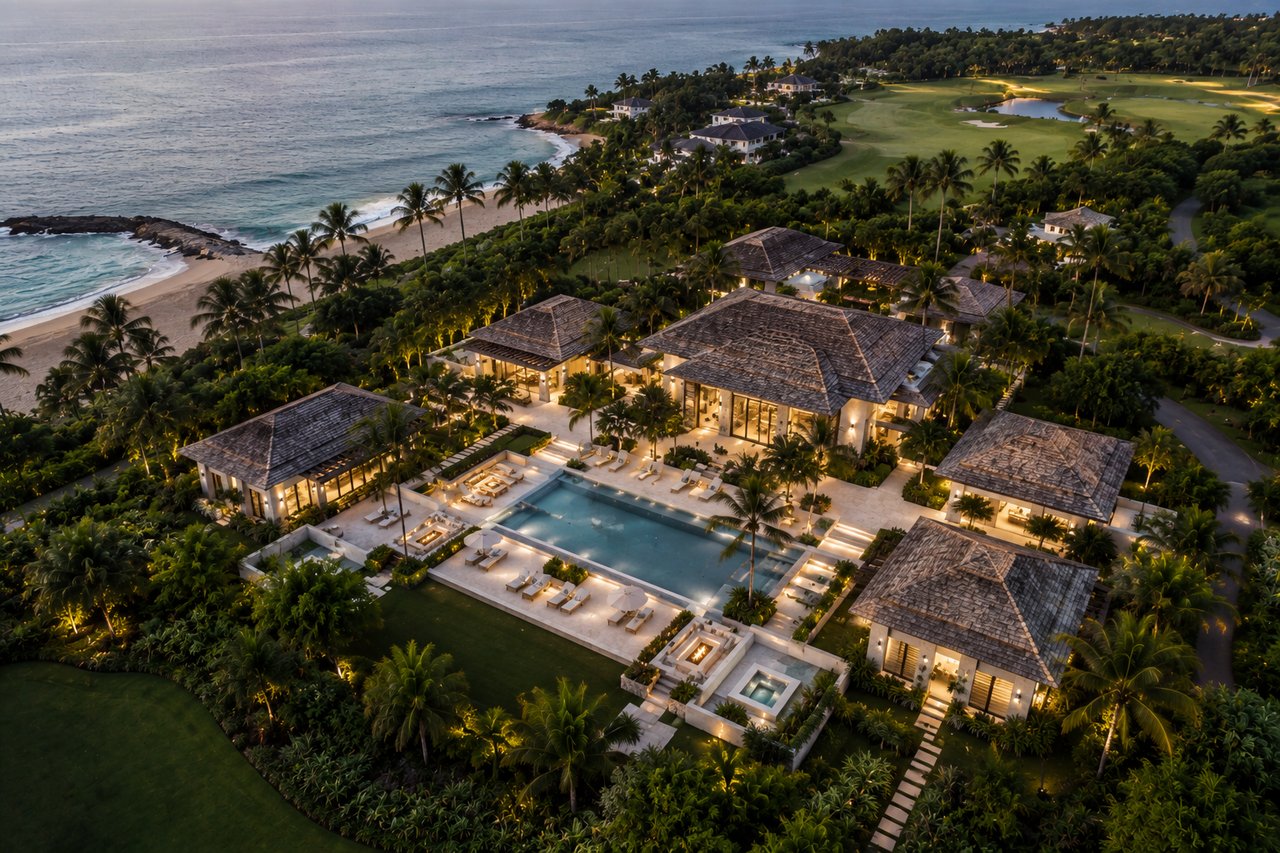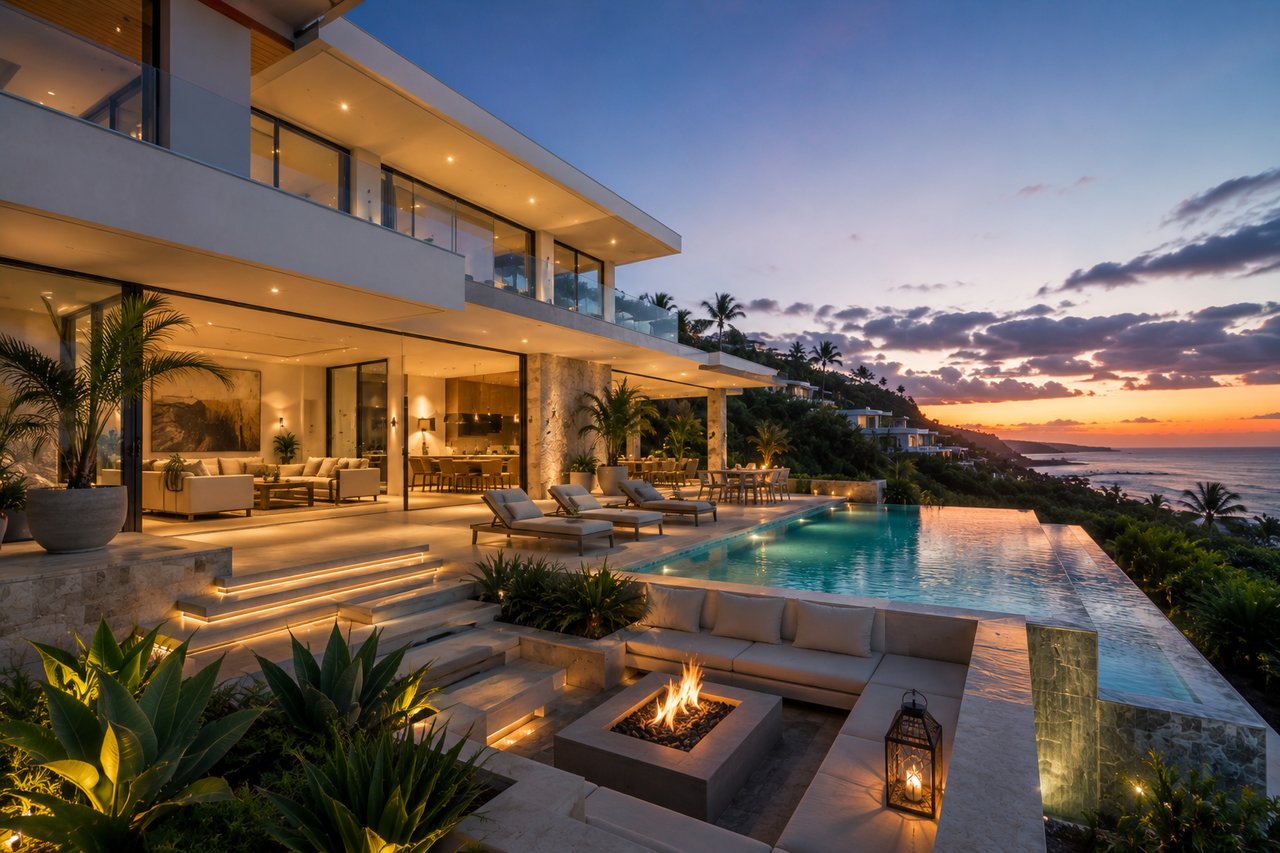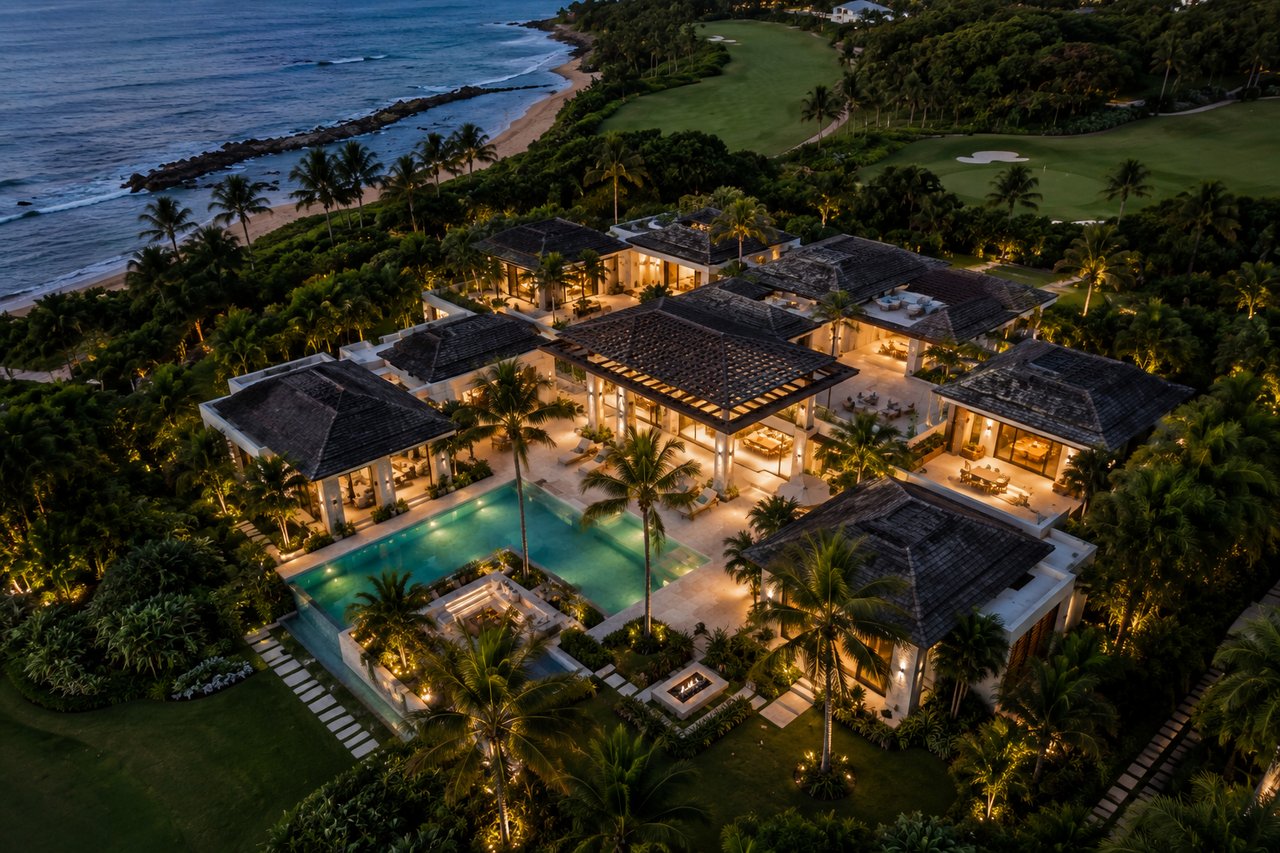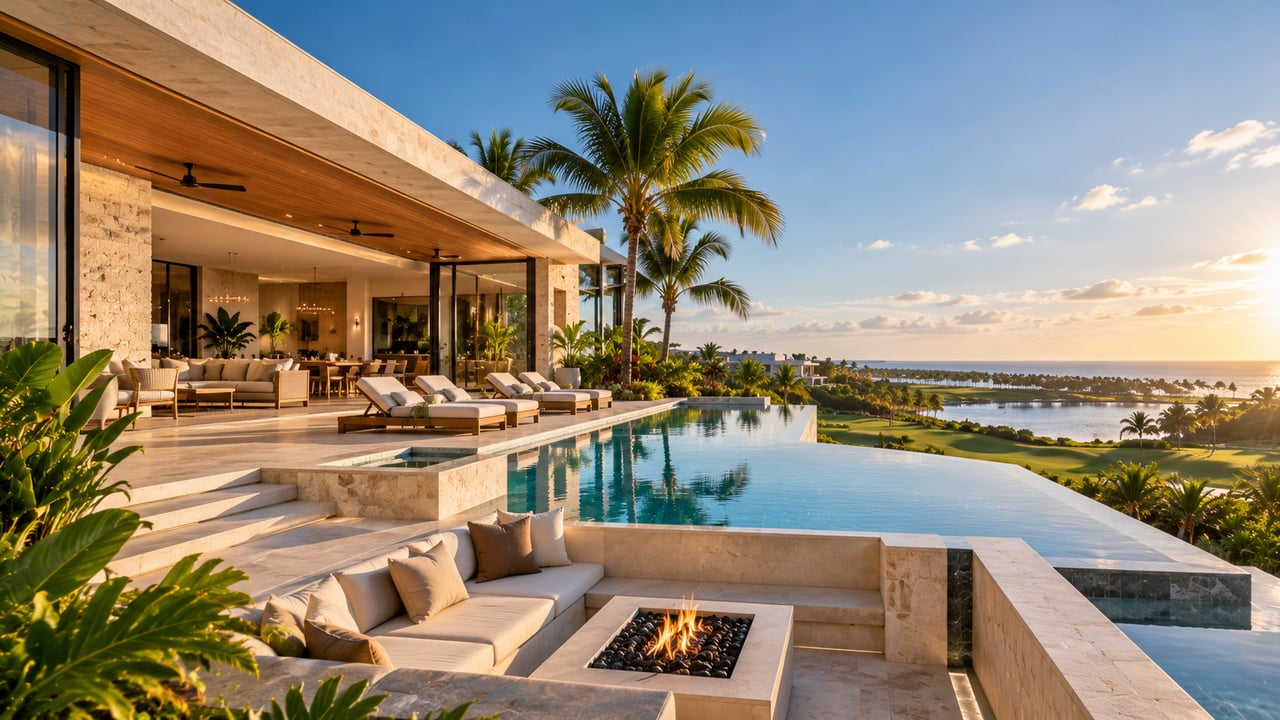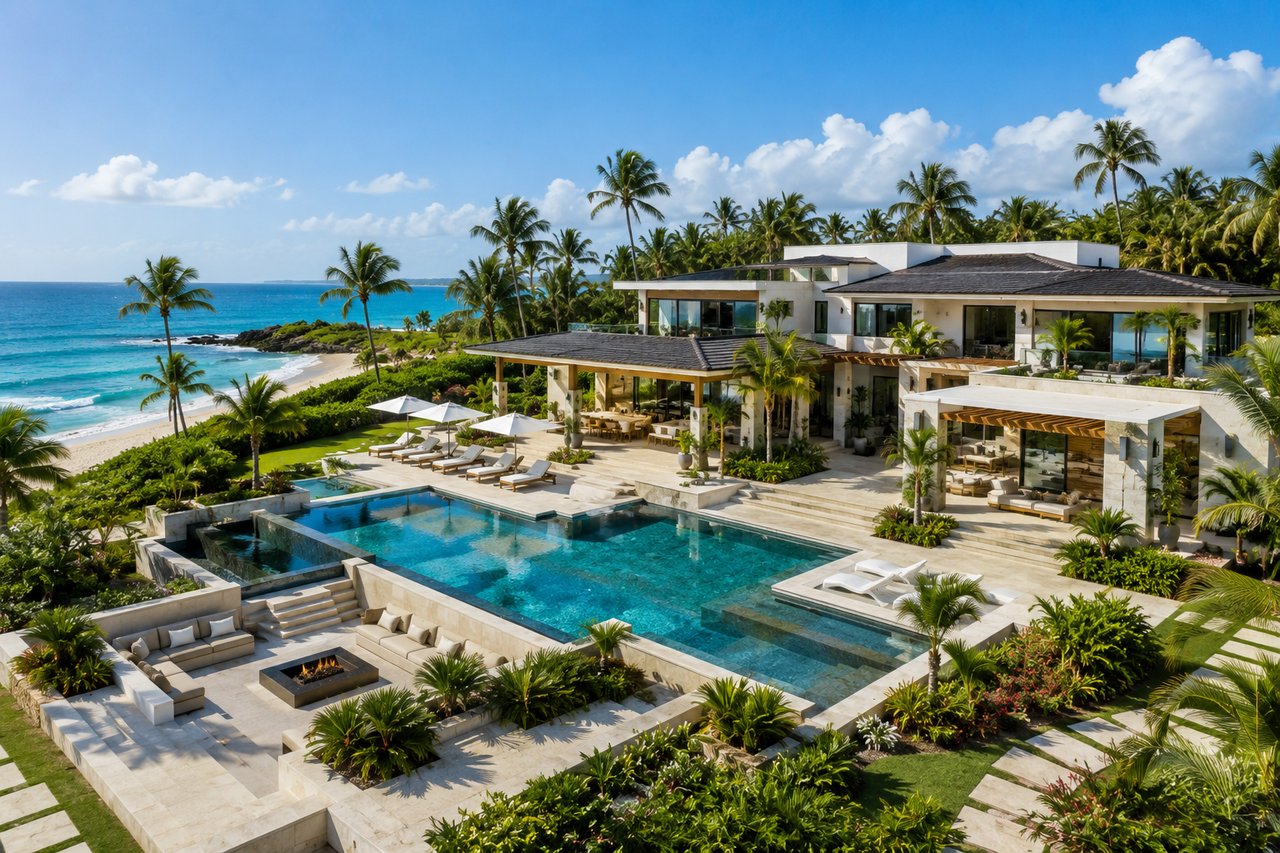
For luxury buyers, few real estate purchases are as compelling as an oceanfront residence in Puerto Rico. The combination of Caribbean views, direct access to the coast, indoor-outdoor living, and year-round tropical climate creates a lifestyle that is difficult to replicate in a conventional residential market.
But oceanfront real estate should be evaluated differently from an inland luxury property.
A spectacular view is only one part of the equation. Coastal exposure can influence maintenance, insurance, building materials, long-term ownership costs, privacy, and even the practical enjoyment of the residence. For condominium buyers, the condition and financial health of the building can be just as important as the interior of the unit.
Puerto Rico also offers several distinct oceanfront environments. A buyer may be comparing a high-rise condominium in Condado, a private residence in Dorado, a beachfront home in Ocean Park, a resort property in Bahía Beach, or a coastal residence in another established community. These properties may all be described as “oceanfront,” but the ownership experience can be dramatically different.
For buyers considering oceanfront real estate in Puerto Rico, the right approach is therefore not simply to ask, How beautiful is the property? The more important question is: Does the property make sense from every angle—lifestyle, location, construction, ownership, and long-term value?
1. What Does “Oceanfront Property” Really Mean in Puerto Rico?
The term oceanfront can describe several different property positions, and buyers should establish exactly what they are purchasing.
A true oceanfront residence generally has a direct physical relationship with the coastline, rather than simply being located within a few blocks of the beach. But even within oceanfront properties, there can be meaningful differences.
A condominium may have:
- Direct Atlantic-facing exposure
- An unobstructed ocean view
- Partial ocean views
- A residence positioned behind another building
- Beach access without direct frontage
- A higher-floor view that provides a stronger visual connection to the water
Similarly, a single-family home may sit directly along the beach, within a private coastal community, or close enough to the shoreline to provide a beach lifestyle without technically being oceanfront.
For luxury buyers, these distinctions matter because proximity, view, access, privacy, and physical exposure can all affect the property's desirability.
A buyer should therefore avoid relying solely on listing terminology. The exact position of the residence should be verified during the property review and due-diligence process.
2. Where Are the Best Places to Buy Oceanfront Property in Puerto Rico?
There is no single “best” oceanfront market in Puerto Rico. The right location depends on the lifestyle the buyer wants.
Condado and San Juan
Condado offers one of Puerto Rico's most established urban oceanfront lifestyles.
Luxury condominiums place residents close to the Atlantic, restaurants, shopping, hotels, cultural attractions, and everyday services. The market is particularly attractive to buyers who want a residence that combines beachfront living with the convenience of a major city.
The trade-off is density. Condado is fundamentally an urban coastal environment, so buyers should expect condominium living, traffic, neighboring buildings, and a more active atmosphere than they would find inside a private resort community.
Dorado
Dorado offers a different interpretation of oceanfront luxury.
Instead of primarily vertical urban living, buyers can find larger residences, private communities, resort-oriented environments, and greater emphasis on space and privacy.
For buyers who prioritize land, security, resort amenities, family-oriented living, and a more private residential setting, Dorado can be particularly compelling.
Ocean Park
Ocean Park provides another San Juan-area option, with a more residential character than Condado.
Its appeal is often centered around beach access, single-family homes, neighborhood atmosphere, and proximity to San Juan's broader urban amenities.
For buyers who prefer a house rather than a high-rise condominium, Ocean Park can offer a very different ownership experience.
Bahía Beach and Other Resort Communities
Resort-oriented coastal communities offer yet another proposition: oceanfront or near-ocean residences integrated into a broader amenity ecosystem.
For buyers who value golf, security, privacy, recreational facilities, hospitality services, and a controlled residential environment, this model can be particularly attractive.
The important point is that “oceanfront luxury” is not one product category.
The first decision should be the lifestyle. The property should follow.
3. Ocean Views Are Valuable—but They Should Not Be the Only Consideration
An exceptional ocean view can be one of the defining characteristics of a luxury property.
In a condominium, factors such as floor height, orientation, balcony design, surrounding structures, and future development can influence the quality of the view.
Two residences with similar square footage can therefore offer very different experiences.
But buyers should resist allowing the view to overshadow the fundamentals.
A beautiful view does not compensate for:
- Poor building maintenance
- Weak condominium governance
- Significant deferred maintenance
- Inadequate reserves
- Difficult insurance conditions
- Limited parking
- Functional problems within the residence
- Unfavorable building rules
- Poor access or inconvenient location
For a luxury acquisition, the objective is not simply to buy the most impressive view available.
It is to acquire a complete property whose physical and financial characteristics support the lifestyle the buyer wants.
4. Evaluate Coastal Exposure Before You Fall in Love With the Property
Oceanfront living has obvious advantages, but the coastal environment also places additional demands on buildings and homes.
Salt air, humidity, wind, intense sun, and tropical weather can affect exterior finishes and building components over time. Metal elements, balconies, windows, façades, roofing systems, mechanical equipment, and other exposed components may require careful maintenance.
This does not mean oceanfront property is a poor investment.
It means buyers should understand the environment in which they are purchasing.
For a single-family home, this may include reviewing:
- Roof condition
- Windows and doors
- Exterior finishes
- Drainage
- Landscaping
- Pool and mechanical systems
- Generators and backup systems
- Air-conditioning equipment
- Corrosion on exposed metal
- Storm-related vulnerabilities
For condominiums, the analysis shifts toward the building:
- Roof and façade maintenance
- Elevators
- Common mechanical systems
- Windows and exterior elements
- Garage and parking structures
- Reserve planning
- Previous assessments
- Building insurance
- Major capital projects
This is one reason experienced buyers evaluate the property and the surrounding ownership structure together.
5. Insurance and Risk Should Be Part of the Buying Decision
Insurance should be discussed early—not after the buyer has already committed emotionally to a property.
Oceanfront properties can have different insurance considerations from inland residences because of their coastal exposure and the characteristics of the building or site.
The precise implications depend on the property, location, construction, elevation, building type, coverage requirements, and current insurance market.
A buyer should therefore understand:
- What insurance is required?
- What does the condominium association's master policy cover?
- What must the individual owner insure separately?
- Are there deductibles that deserve particular attention?
- Has the building experienced previous assessments related to insurance or storm damage?
- Are there gaps between association and individual coverage?
- What will the expected annual insurance cost be?
For condominiums, this information should be reviewed as part of the building's broader financial and operational due diligence.
The important principle is simple: insurance is part of the economics of oceanfront ownership.
6. For Condos, Evaluate the Building as Carefully as the Residence
This is particularly important in Puerto Rico's oceanfront condominium market.
A buyer can renovate a kitchen. They can replace flooring. They can redesign bathrooms and improve lighting.
They cannot independently replace the condominium's roof, elevators, façade, structural systems, or common infrastructure.
That is why sophisticated buyers should request and review appropriate condominium documentation before closing.
Depending on the property, this may include information concerning:
- Association finances
- Monthly maintenance fees
- Reserve funds
- Pending or recent special assessments
- Building insurance
- Major repairs
- Board or association decisions
- Rules and restrictions
- Maintenance history
- Common-area improvements
- Parking rights
- Rental policies
The goal is not to make the buying process unnecessarily complicated.
It is to understand what you are actually buying beyond the four walls of the residence.
A beautifully renovated unit inside a poorly maintained building is a fundamentally different proposition from a well-maintained residence inside a financially sound and professionally operated condominium.
7. Think About Privacy, Access, and the Daily Ownership Experience
Luxury buyers often begin with the headline features: oceanfront, pool, terrace, views, bedrooms, square footage.
But the details of everyday life can determine whether the property remains satisfying for years.
Consider questions such as:
How private is the residence?
Can neighboring properties see directly into the terrace or living areas?
How easy is beach access?
Is the beach directly accessible from the property, or does the buyer need to use a public access point?
How convenient is parking?
This can be especially important in urban condominium markets.
How does the property function when the owner is away?
A second-home buyer may prioritize security, maintenance, building management, and lock-and-leave convenience.
What happens during severe weather?
Understanding backup power, storm preparation, building protocols, and property management can be important.
How does the property fit the buyer's actual routine?
A residence that is spectacular for a two-week vacation may not necessarily be the right primary residence.
The best oceanfront property is not necessarily the most dramatic one.
It is the one that works exceptionally well for the way its owner intends to live.
8. Oceanfront vs. Near-Ocean: Is Direct Waterfront Always Worth the Premium?
Not necessarily.
For some buyers, direct oceanfront positioning is the entire reason for the acquisition. They want the sound of the waves, uninterrupted views, direct beach access, and the sense of owning a rare coastal position.
For others, being one or several blocks from the water may provide a better balance between lifestyle and price.
A near-ocean residence may offer:
- Greater privacy
- Different exposure to wind and salt air
- More residential surroundings
- Additional land or interior space
- Potentially broader property choices
- Easy access to the beach without direct frontage
The decision comes down to priorities.
If the ocean view is non-negotiable, paying a premium for direct frontage may make sense.
If the buyer primarily wants proximity to the beach and coastal lifestyle, a highly positioned near-ocean residence may deserve serious consideration.
This is where comparative property analysis becomes valuable. Buyers should evaluate what the premium actually purchases, rather than assuming that every additional step toward the water represents equivalent value.
9. The WoodsLux Perspective: Buy the Coastal Lifestyle, Not Just the View
At WoodsLux Realty, we believe oceanfront buyers should evaluate a property through several lenses simultaneously: location, lifestyle, physical condition, ownership structure, privacy, and long-term suitability.
Puerto Rico's coastal luxury market is highly diverse. An oceanfront condominium in Condado is not interchangeable with a private residence in Dorado, and neither is identical to a resort property elsewhere on the island.
The right choice depends on the buyer's priorities.
Some clients want an elegant San Juan residence where they can walk to restaurants, the beach, and the city's cultural amenities. Others want privacy, space, security, and resort infrastructure. Others are looking for a second home that can function as a sophisticated retreat without the responsibilities of a large estate.
For each of these buyers, the definition of “best oceanfront property” is different.
That is why we recommend beginning with the ownership objective and lifestyle—and then narrowing the search to the locations and properties that genuinely fit.
For buyers currently exploring the market, WoodsLux's active luxury inventory can be reviewed here:
Explore WoodsLux Luxury Properties for Sale in Puerto Rico
10. A Practical Checklist for Buying Oceanfront Real Estate in Puerto Rico
Before making an offer, luxury buyers should be prepared to evaluate the property systematically.
Location
- Is it genuinely oceanfront?
- What is the quality of the view?
- Is the coastline protected or exposed?
- What amenities and services are nearby?
- Does the neighborhood match the intended lifestyle?
Property
- What is the condition of the structure?
- How old are major systems?
- Are there signs of moisture or corrosion?
- Is the layout suitable for long-term use?
- Is there sufficient parking and storage?
Condominium
If purchasing a condo:
- How financially healthy is the association?
- What are the monthly fees?
- Are special assessments pending?
- What does the master insurance policy cover?
- Are there rental or occupancy restrictions?
- What major capital projects are planned?
Ownership
- What are the estimated annual carrying costs?
- What insurance coverage is required?
- What maintenance will the property require?
- Who will manage the property when the owner is away?
- Does the property fit the buyer's intended use?
Due Diligence
Finally, buyers should work with the appropriate legal, financial, inspection, insurance, and real estate professionals to verify the property's condition, title, documentation, obligations, and transaction terms.
A luxury purchase deserves luxury-level diligence.
Conclusion
Buying oceanfront property in Puerto Rico can provide an exceptional combination of lifestyle, location, and long-term ownership appeal. But the strongest acquisitions are rarely based on the view alone.
The most important decisions happen beneath the surface: understanding the exact location, evaluating coastal exposure, reviewing insurance considerations, assessing building or property condition, understanding association finances when applicable, and determining whether the residence truly fits the buyer's intended lifestyle.
Puerto Rico offers multiple versions of oceanfront luxury—from sophisticated condominiums in San Juan to private residences and resort communities farther from the urban core.
The right property is ultimately the one that aligns the location, architecture, privacy, amenities, ownership responsibilities, and lifestyle with the buyer's priorities.
For buyers considering an oceanfront acquisition, WoodsLux Realty can help identify opportunities across Puerto Rico's luxury markets and coordinate the next stage of the search—from comparing neighborhoods to evaluating individual residences and arranging private property viewings.
Frequently Asked Questions
1. Is oceanfront property in Puerto Rico a good investment?
Oceanfront property can be highly desirable because of its scarcity, lifestyle appeal, and location. However, investment quality depends on the individual property, building, market, ownership costs, condition, and purchase price—not simply on being oceanfront.
2. What are the best areas for oceanfront property in Puerto Rico?
Popular luxury markets include Condado, Dorado, Ocean Park, and select resort communities such as Bahía Beach. Each offers a different combination of privacy, amenities, property types, accessibility, and lifestyle.
3. Are oceanfront condos more expensive to maintain?
They can be. Coastal exposure may increase maintenance requirements, while condominium owners also share responsibility for common building expenses, insurance, reserves, and capital projects. The actual cost varies considerably by property and building.
4. What should I check before buying an oceanfront condo in Puerto Rico?
Review the condition and financial health of the building as well as the individual residence. Buyers should examine association finances, insurance, maintenance history, special assessments, building rules, major systems, parking, and other relevant documentation.
5. Is an ocean view the same as oceanfront?
No. A property can have an ocean view while being several blocks from the coast or positioned behind other buildings. Buyers should verify the property's exact physical relationship to the shoreline and understand what rights and access are included.
6. Should I buy an oceanfront home or condominium in Puerto Rico?
It depends on your lifestyle and ownership objectives. Condominiums can offer convenience, amenities, security, and lock-and-leave living, while single-family homes may provide greater privacy, land, and control over the property.
7. Can WoodsLux help me find oceanfront luxury property in Puerto Rico?
Yes. WoodsLux Realty works with buyers exploring luxury residences throughout Puerto Rico, including coastal markets such as Condado, Dorado, Ocean Park, and other premier communities. The team can help narrow the search based on lifestyle, property type, location, privacy, amenities, and budget.