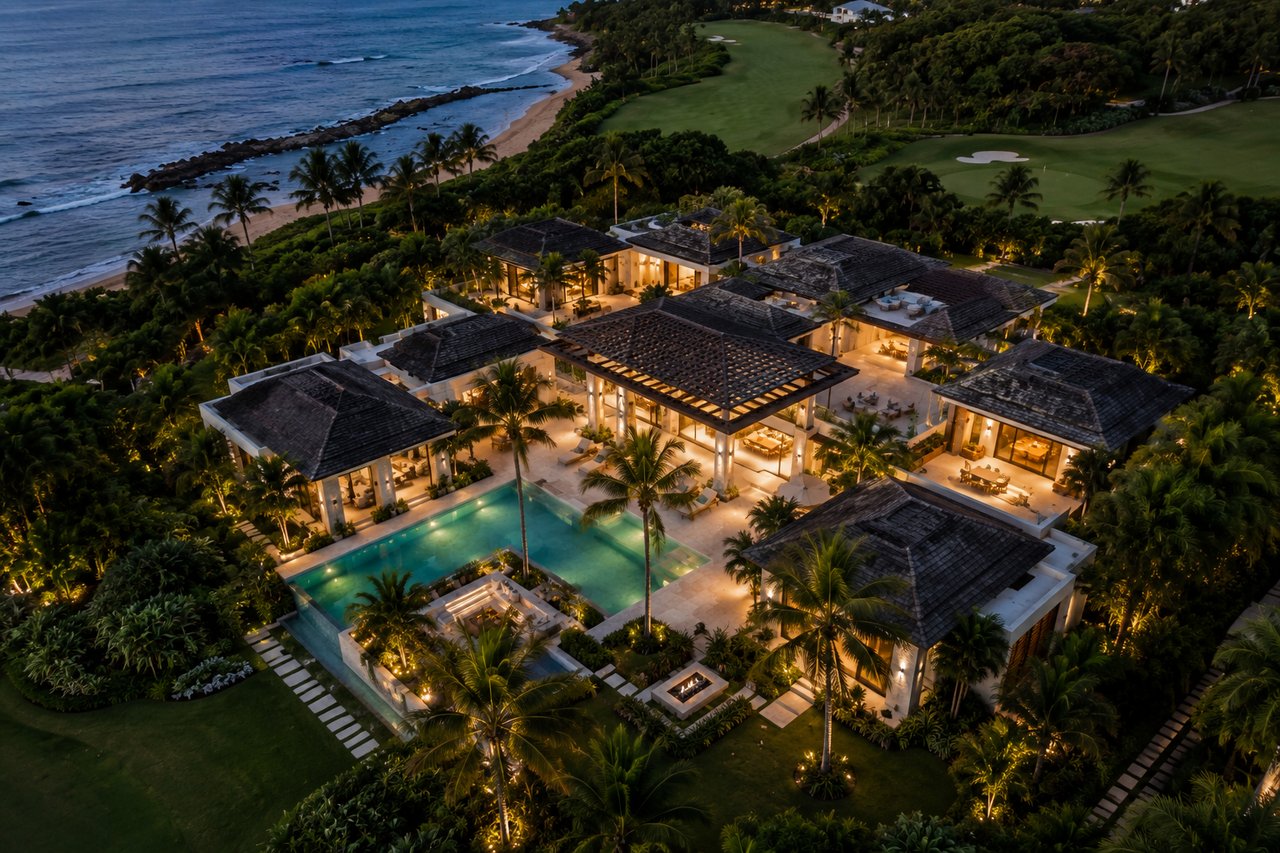
A luxury property's asking price tells only part of the story.
Before purchasing, buyers also need to understand how the property can be insured, what the policy covers, which risks remain with the owner, and whether the cost of protection fits the ownership plan.
This is particularly important in Puerto Rico, where hurricane exposure, heavy rainfall, flooding, and other weather-related risks can affect the way residential properties are evaluated.
A beautiful residence is not automatically easy to insure. Nor does an insurance policy necessarily cover every form of damage a buyer might assume it does.
The right approach is to treat insurance as an essential part of acquisition due diligence—not as an administrative task to complete after the purchase agreement is signed.
1. Establish Insurability Before You Commit
One of the most important questions is whether suitable coverage is available for the specific property.
Do not assume that a property can be insured on the same terms as another home nearby.
Insurers may assess a range of characteristics, including location, construction, roof condition, age, previous losses, property use, protective systems, and the amount of coverage requested.
A property's intended use matters as well. A home occupied by its owner may require a different policy arrangement from a residence used primarily for short-term rentals or another commercial purpose.
Before closing, request quotations from an appropriately authorized insurance professional and confirm that the proposed coverage matches the actual property and its intended use.
A preliminary estimate is not necessarily a binding policy.
The buyer should understand what has been quoted, what remains subject to underwriting, and whether any conditions must be satisfied before coverage becomes effective.
2. Understand What the Policy Actually Covers
The phrase "homeowners insurance" can create a false sense of certainty.
Policies differ, and the precise wording matters.
Buyers should ask their insurance professional to explain coverage for the principal structure, personal property, liability, additional living expenses where applicable, and other relevant protections.
They should also identify exclusions, sublimits, special conditions, and any requirements concerning property maintenance or occupancy.
A policy should be reviewed as a contract, not merely compared by its premium.
Two quotations with similar prices may provide materially different protection.
Likewise, a lower premium may reflect a larger deductible, narrower coverage, or exclusions that matter to the owner.
The relevant question is not simply how much the policy costs.
It is what financial protection the policy provides under the circumstances that matter most.
3. Pay Particular Attention to Hurricane and Wind Coverage
For a Puerto Rico property, buyers should understand how the policy treats wind-related damage and hurricane losses.
Ask specifically about:
- Whether windstorm or hurricane damage is covered
- Any separate hurricane or wind deductible
- Whether deductibles are fixed amounts or calculated percentages
- The basis used to calculate any percentage deductible
- Applicable exclusions and limitations
- Any conditions concerning roof maintenance or protective features
A percentage deductible can represent a substantial out-of-pocket amount on a high-value property.
For example, a deductible calculated as a percentage of an insured amount may produce a very different financial obligation from a small fixed deductible.
The actual policy language determines the result, so buyers should obtain a clear explanation from their insurance professional rather than relying on general descriptions.
4. Do Not Assume Flood Damage Is Included
Flood coverage deserves particular attention.
The Puerto Rico Office of the Commissioner of Insurance advises property owners that property policies generally do not cover flood damage and recommends considering specific flood coverage when appropriate. Office of the Commissioner of Insurance: Hurricane Season Guidance
This distinction matters because water damage can arise from different causes, and policies may treat those causes differently.
A buyer should ask how the policy defines flooding, whether separate flood insurance is available and appropriate, and what limits, deductibles, exclusions, and waiting periods may apply.
Do not infer coverage solely from the presence of a waterfront view, a drainage system, or a property that has never experienced flooding.
Instead, investigate the property's location and risk exposure, and have the proposed policy reviewed in light of those findings.
5. Confirm That the Insured Value Reflects Rebuilding Costs
A property's market value and its rebuilding cost are not the same thing.
Market value may reflect land, location, demand, views, and other factors. Rebuilding cost concerns the expense of reconstructing the insured structure under the policy's terms.
For a luxury residence, rebuilding may involve specialized materials, custom millwork, imported finishes, architectural details, and construction requirements that are not easily replaced with standard alternatives.
Buyers should therefore ask how the insurer calculates the dwelling limit and whether that limit adequately reflects the cost of reconstruction.
The Office of the Commissioner of Insurance specifically encourages policyholders to review insured values against current rebuilding or replacement costs. It also warns that underinsurance can leave an owner with insufficient funds after a loss. Official insurance guidance
An independent reconstruction estimate may be useful for a particularly distinctive property.
6. Review the Property's Claims and Loss History
The property's past can matter when evaluating future insurability.
Where available and lawfully obtainable, investigate prior claims, known water intrusion, storm damage, roof repairs, structural work, and other significant loss events.
Ask whether previous damage was professionally repaired and whether supporting documentation exists.
A prior claim does not automatically make a property unsuitable. The important questions concern the cause, scope, quality of repair, and any unresolved issues.
Buyers should also understand that a seller's disclosure and an insurer's underwriting assessment serve different purposes. Neither replaces the other.
The objective is to identify issues that could affect coverage, future premiums, repair obligations, or the owner's risk exposure.
7. Understand the Difference Between a Deductible and an Exclusion
These terms have different financial consequences.
A deductible is generally the amount or portion of a covered loss the policyholder must bear before insurance pays the covered remainder, subject to the policy's terms.
An exclusion identifies a loss, cause, or circumstance that the policy does not cover.
A buyer should not treat the two as interchangeable.
A large deductible may be manageable for an owner who has adequate reserves. An exclusion involving a material property risk may require a different response altogether.
Ask the insurance professional to explain the policy's major exclusions and deductibles in plain language.
This discussion should take place before closing, when the buyer still has an opportunity to evaluate the overall acquisition.
8. Consider Liability and the Intended Use of the Property
Luxury homes may include pools, terraces, guest accommodations, recreational spaces, or other features that create particular liability considerations.
The appropriate coverage depends on the property's characteristics and use.
If the home will be rented to paying guests, the owner should not assume that a standard personal-residence policy will cover every rental-related exposure.
Likewise, if the property will be held through an entity or used for business purposes, the ownership structure should be disclosed accurately to the insurance professional.
Ask whether additional liability coverage or a different policy arrangement is appropriate.
The objective is to make sure that the coverage reflects the real-world way the property will be occupied and operated.
9. Evaluate Insurance Alongside the Entire Ownership Budget
Insurance should be considered together with the other costs of owning the property.
Buyers should estimate annual premiums, deductibles, association-related insurance arrangements where applicable, maintenance, and the financial reserves needed to manage unexpected events.
For condominium purchases, determine which portions of the building are insured through the association and which responsibilities remain with the unit owner.
Do not assume that a master policy covers all interior improvements, personal property, or owner-specific liability.
Ask for the relevant documents and have the division of responsibilities clarified.
A property may remain attractive even with higher insurance costs, but those costs should be understood before the buyer decides what price and ownership structure are appropriate.
10. Address Insurance Early in the Transaction
Insurance can become more complicated when buyers wait until the end of the closing process.
Coverage availability, underwriting requirements, inspections, documentation, and policy terms may take time to resolve.
The Puerto Rico insurance regulator also warns that insurers may temporarily restrict new policies or changes to existing coverage once a storm watch or warning has been issued. Office of the Commissioner of Insurance
For this reason, buyers should not treat insurance as a last-minute formality.
Begin the process early, provide accurate information, and clarify what must be completed before the transaction closes.
The WoodsLux Perspective
At WoodsLux Realty, we believe a luxury property's insurance profile should be understood alongside its location, condition, documentation, and ownership costs.
A spectacular residence may still be the right acquisition when its risks are understood and appropriately managed. The concern is not that every property must have identical insurance costs.
It is that buyers should know what protection is available, what it costs, and which financial risks remain their responsibility.
That understanding makes the purchase decision more informed and helps prevent avoidable surprises after closing.
Explore current WoodsLux luxury properties priced at $1 million and above:
Explore WoodsLux Luxury Listings
Conclusion
Property insurance is a central part of evaluating a luxury residence in Puerto Rico.
Buyers should understand availability, coverage limits, hurricane deductibles, flood protection, rebuilding costs, claims history, and the policy's treatment of the property's intended use.
The goal is not merely to obtain a policy.
It is to understand the protection it provides and the financial responsibilities it leaves with the owner.
When that review takes place early, insurance becomes a useful part of due diligence rather than an unexpected obstacle near closing.
FAQ
Is property insurance important when buying luxury real estate in Puerto Rico?
Yes. Buyers should confirm coverage availability, policy terms, premiums, deductibles, and any exclusions before committing to the purchase.
Does standard property insurance cover flooding in Puerto Rico?
Property policies generally do not cover flood damage. Buyers should discuss separate flood coverage and the property's specific exposure with an authorized insurance professional.
Why does rebuilding cost matter?
Market value and rebuilding cost measure different things. The insured dwelling limit should be evaluated against the estimated cost of reconstructing the property under the policy's terms.
What is a hurricane deductible?
It is a deductible that applies to qualifying hurricane or wind-related losses under the policy. Its calculation and application depend on the actual policy wording.
Should I review insurance before making an offer?
It is prudent to investigate insurability and indicative costs early, then confirm acceptable coverage and terms before closing.
Does a rental property need different insurance?
It may. The appropriate coverage depends on occupancy, rental activity, ownership structure, and other factors. Disclose the intended use to the insurance professional.
Who should review a property's insurance requirements?
An authorized insurance producer or qualified insurance professional should explain available coverage, exclusions, deductibles, and the policy's suitability for the property.