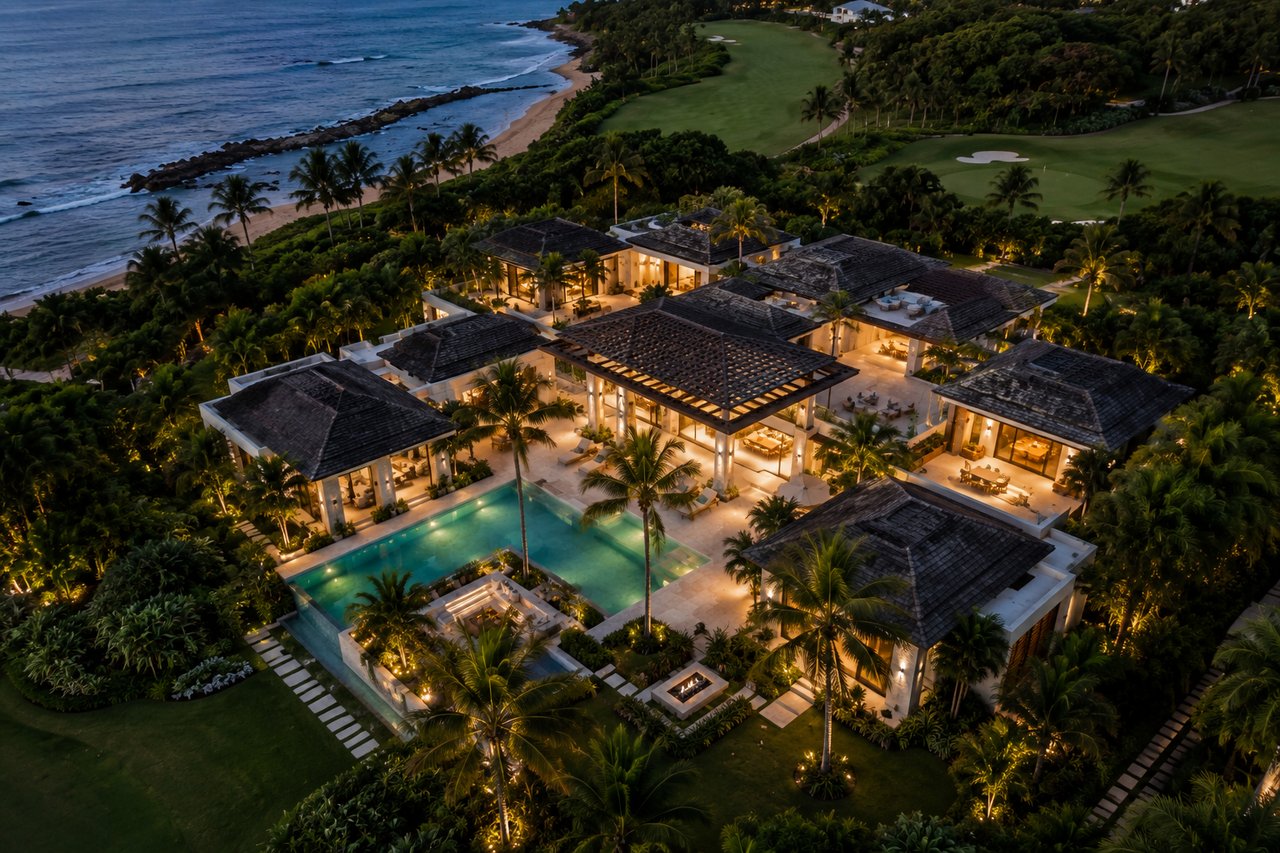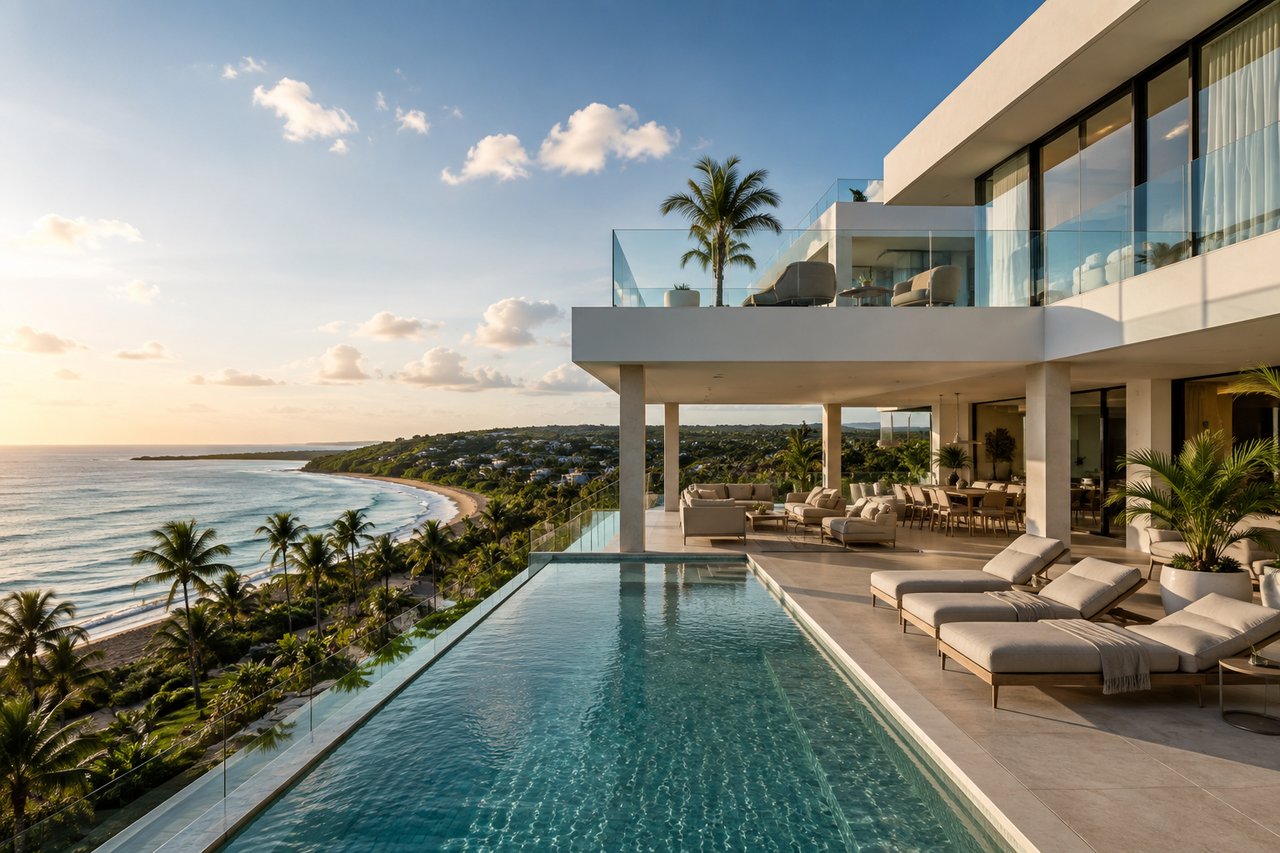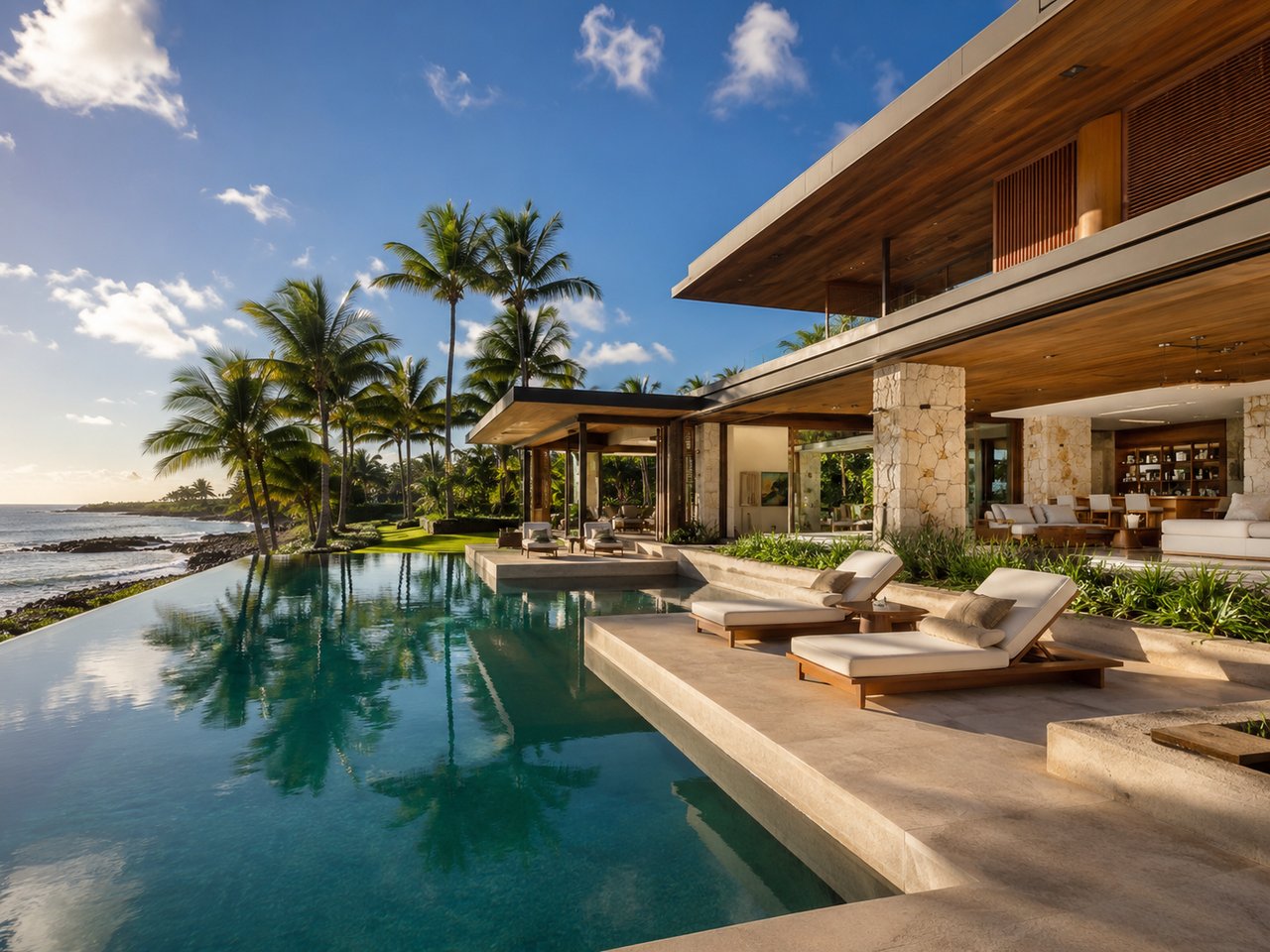
Vega Alta offers luxury buyers a different set of considerations from the more frequently discussed markets of metropolitan San Juan and Dorado. Located on Puerto Rico's north coast between Dorado and Vega Baja, the municipality includes coastal and inland settings, making the specific location of a property central to the buying decision.
For some buyers, the appeal may be proximity to the coast. Others may prioritize a more residential setting, usable outdoor space, privacy, or access to nearby services and regional road connections.
The municipality should not be evaluated as one uniform real estate market. A property's immediate surroundings, elevation, access, construction, and relationship to the coastline can influence its practical suitability as much as its architectural style.
This guide explains how to evaluate luxury real estate in Vega Alta with an emphasis on the details that matter before making a purchase.
1. Understand the Property's Specific Setting
Begin with the exact location rather than the municipality's name alone.
A property near the coast may offer a different lifestyle and maintenance profile from one farther inland. A residence in an established neighborhood may function differently from a home on a larger, more secluded parcel.
During your search, consider:
- Distance to the places you expect to visit regularly
- Access to main roads and essential services
- The immediate character of the surrounding neighborhood
- Noise, privacy, and nearby land uses
- The property's elevation and drainage characteristics
- Whether the location supports your intended pattern of occupancy
Use the address to evaluate the property in context. Visit the surrounding area at different times where possible, and consider how traffic, noise, lighting, and activity may vary throughout the day.
A location that feels peaceful during a single showing may have a different character at other times. Direct observation can help you determine whether the setting fits your preferences.
2. Decide Whether Coastal or Inland Living Suits You
Vega Alta's north-coast location makes it important to distinguish between coastal proximity and a broader coastal lifestyle.
A property close to the shoreline may offer convenient access to coastal recreation or views, depending on its position. It may also require closer attention to salt exposure, weather conditions, drainage, exterior materials, and insurance considerations.
An inland property may offer a different balance of privacy, landscaping, terrain, and access. Its suitability still depends on the individual site, building, and surrounding infrastructure.
Do not assume that every coastal property has the same exposure or that every inland property is insulated from weather-related risks.
For any property near the shoreline, review relevant maps and available records, ask about previous water intrusion or storm damage, and consult appropriate professionals about site-specific concerns. A property's distance from the water alone does not establish its risk profile.
3. Evaluate Access to Everyday Services
Luxury ownership should work for daily life, not only for occasional visits.
Before purchasing, map the services you expect to use regularly. These may include grocery shopping, healthcare, dining, fitness, schools, professional services, and other household needs.
Assess the actual routes from the property rather than relying solely on broad distance estimates. Road access, traffic patterns, and your daily schedule may affect convenience.
If you plan to live in Vega Alta full-time, consider how often you will travel to other municipalities for work, appointments, social activities, or family commitments.
For a second home, think about how easily you can reach the property from your usual arrival point and how practical it will be to arrange supplies, repairs, and household services when you are not present.
The objective is to understand the rhythm of ownership in the specific location.
4. Look Beyond the House to the Land
The lot can shape how a luxury property is used and maintained.
Review the relationship between the house, driveway, outdoor living areas, landscaping, neighboring properties, and any undeveloped portions of the site.
Consider how the terrain affects access, drainage, outdoor usability, and future maintenance. Sloped land, retaining structures, mature trees, and extensive landscaping may each create additional responsibilities.
Ask what areas are included in the property and how the boundaries are documented. If the available records or physical markers leave uncertainty, consult a qualified surveyor or real estate attorney as appropriate.
Do not assume that a fence, hedge, driveway, or maintained lawn establishes the legal property line.
For a larger parcel, consider whether every part of the land serves your intended use. Extra acreage may create privacy and flexibility, but it can also require more maintenance and specialized care.
5. Assess Construction Quality and Climate Performance
A luxury home should be evaluated for how it performs in its environment, not only for its finishes.
Inspect the condition of the roof, exterior walls, windows, doors, balconies, drainage features, and other components that protect the interior. Ask about the maintenance history and any known repairs.
For coastal or humid environments, pay particular attention to moisture management, corrosion, sealants, and the condition of exposed metal components.
Inside the home, evaluate air-conditioning performance, ventilation, water pressure, visible signs of moisture, and the condition of major equipment.
A polished renovation does not necessarily reveal what lies behind the finishes. Where concerns arise, seek an independent assessment from a qualified professional.
If the property includes substantial retaining walls, unusual structural features, extensive glazing, or specialized systems, determine whether additional expertise is appropriate.
6. Understand the Practicalities of Outdoor Living
Outdoor space can be a significant part of the appeal of a luxury home in Vega Alta, but its usability depends on design and maintenance.
Evaluate how terraces, gardens, patios, pools, and other outdoor areas relate to the main residence. Consider shade, privacy, wind exposure, lighting, drainage, and the routes between indoor and outdoor spaces.
Ask how the landscaping is maintained and whether irrigation, pumps, lighting, or other systems require regular servicing.
If the property includes a pool or specialized outdoor installation, review its condition, maintenance records, and operating requirements.
For outdoor areas near the coast, ask how materials and equipment have performed under local conditions. A design feature that looks attractive during a viewing should also be practical to maintain over time.
7. Review Ownership Costs and Insurance Early
Purchase price is only one component of the financial commitment.
Before proceeding, build a realistic ownership budget that accounts for property maintenance, insurance, utilities, landscaping, pool or equipment servicing, and any applicable association charges.
Insurance availability, premiums, deductibles, exclusions, and requirements can vary by property and intended use. Obtain property-specific information from a qualified insurance professional before relying on assumptions.
If the home will be vacant for extended periods or used as a seasonal residence, explain that plan to the insurer and ask how it affects coverage.
Where the property has significant outdoor improvements, specialized systems, or unusual construction features, make sure the insurance review reflects those details.
8. Match the Property to Your Intended Use
The right Vega Alta property depends on how you expect to live in it.
For a primary residence, access to services, daily travel, and the practicality of year-round maintenance may be especially important.
For a second home, ease of access, reliable local oversight, secure storage, and a clear maintenance plan may carry more weight.
For a buyer considering future resale, assess whether the property's location, layout, and ongoing costs are likely to appeal to a range of potential purchasers. No feature guarantees resale performance, so evaluate the home against comparable properties and professional local guidance.
If you plan to rent the property, confirm that the intended use is permitted under applicable rules, governing documents, and insurance terms. Do not assume that rental use is allowed simply because the property is in a desirable location.
9. Complete Property-Specific Due Diligence
Before committing, assemble a clear picture of the property and its documentation.
Depending on the residence, your review may include the purchase agreement, title and registry matters, available surveys, permits for relevant work, insurance information, inspection findings, maintenance records, and applicable association documents.
The precise requirements depend on the property and transaction. A qualified local attorney and other relevant professionals can help determine what should be verified.
For a coastal or unusually situated property, ask whether additional environmental, boundary, drainage, or structural review is appropriate.
Avoid treating the seller's description, marketing materials, or a single inspection as a substitute for a complete due diligence process.
The WoodsLux Perspective
At WoodsLux Realty, we believe the strongest property search begins with the buyer's intended lifestyle and then narrows to the specific location and residence.
Vega Alta deserves to be evaluated on its own characteristics rather than as a simple alternative to a neighboring market. Coastal access, inland privacy, daily convenience, site conditions, and property upkeep can vary considerably within the municipality.
A careful buyer looks beyond the headline features and asks how the home will function across ordinary days, seasonal visits, and future ownership.
Explore current WoodsLux luxury properties priced at $1 million and above:
Explore WoodsLux Luxury Listings
Conclusion
Luxury real estate in Vega Alta should be evaluated through the combined lens of location, lifestyle, construction, site conditions, and ownership responsibilities.
The municipality's coastal and inland settings can offer different advantages, but the details of the individual property matter most. Review access to services, inspect the home's condition, understand the land, obtain property-specific insurance guidance, and complete appropriate due diligence before making a decision.
The best purchase is not simply the home with the most impressive features. It is the property that fits your priorities and can be owned with a clear understanding of its obligations.
FAQ
Where is Vega Alta, Puerto Rico?
Vega Alta is a municipality on Puerto Rico's north coast, between Dorado and Vega Baja. Buyers should evaluate the specific property's location and access rather than treating the entire municipality as one uniform market.
What should luxury buyers consider when buying in Vega Alta?
Consider the property's exact setting, access to services, construction quality, land and drainage, maintenance needs, insurance, and suitability for your intended use.
Is a coastal property in Vega Alta more difficult to maintain?
It can have different maintenance requirements depending on its exposure and construction. Salt, humidity, wind, and water management may deserve closer review, but conditions vary by property.
Should I choose a coastal or inland property?
The decision depends on your priorities. Compare the lifestyle, access, privacy, site conditions, maintenance responsibilities, and insurance considerations of the specific properties you are evaluating.
What due diligence should I complete before buying?
The process may include a professional inspection, review of title and available property records, verification of relevant permits, insurance review, and additional assessments appropriate to the site and building.
Can I rent out a luxury property in Vega Alta?
Do not assume rental use is permitted. Verify applicable laws, property-specific restrictions, association or community documents, and insurance requirements before making rental income part of your purchase plan.
How should I budget for ownership?
Consider insurance, utilities, routine maintenance, landscaping, equipment servicing, repairs, and any applicable association charges. Obtain property-specific estimates rather than relying on general assumptions.