Luxury real estate is often described in terms of location, architecture, views, amenities, and finishes.
For multigenerational families, however, the most important feature may be something less obvious:
How well does the property allow different generations to live together without feeling as though everyone is living on top of one another?
That question is becoming increasingly relevant as affluent families use Puerto Rico residences in more flexible ways. A property may serve as a primary residence, seasonal home, family gathering place, or long-term legacy asset.
The ideal multigenerational home needs to provide both connection and separation.
Grandparents may want quiet spaces. Adult children may need independent bedrooms or living areas. Younger children may require safe outdoor spaces. Guests may need privacy. And the family may want the property to remain practical as circumstances change.
For luxury buyers, this means evaluating the residence less like a collection of rooms and more like a long-term family environment.
1. Look for Flexible Living Arrangements
The strongest multigenerational homes tend to offer multiple ways of using the same space.
Consider:
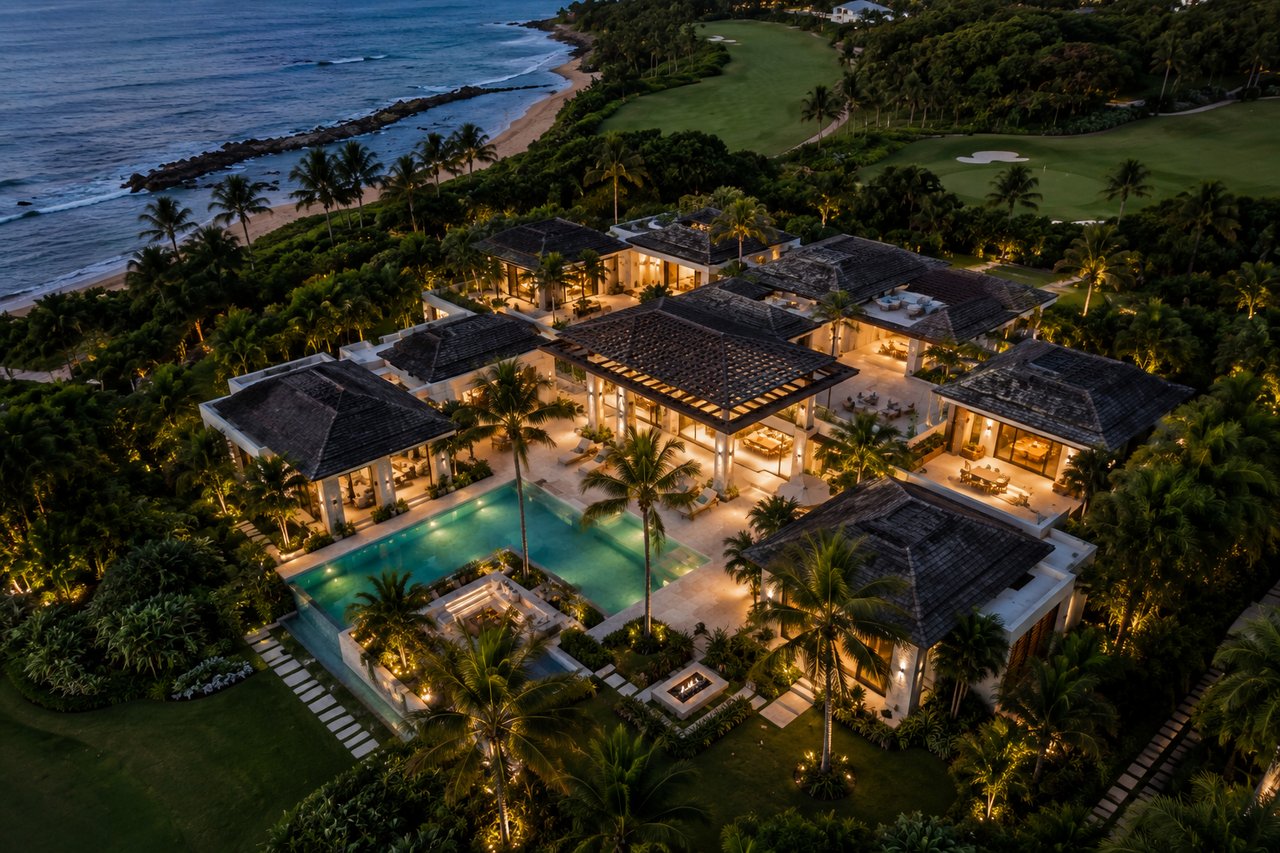
- Separate bedroom wings
- Guest suites
- Secondary living rooms
- Private offices
- Flexible rooms
- Separate entrances
- Outdoor gathering spaces
- Multiple terraces
- Ground-floor bedrooms
Flexibility becomes particularly valuable when different family members use the residence at different times.
A home that works for six people today may need to accommodate ten during holidays.
The ability to change how rooms function can therefore be more valuable than simply having a very large floor plan.
2. Prioritize Private Bedroom Zones
A large bedroom count does not automatically create privacy.
The configuration matters.
For a multigenerational household, buyers should consider whether bedrooms are clustered together or distributed throughout the residence.
Separate wings can allow:
- Grandparents to maintain quiet
- Parents to have private space
- Teenagers to have independence
- Guests to stay comfortably
- Household staff to operate discreetly
This is one of the areas where luxury architecture can provide a genuine lifestyle advantage.
The best homes do not merely provide more rooms.
They create separate experiences within one residence.
3. Consider Ground-Floor Living
Accessibility becomes more important as a family grows older.
A residence with a first-floor bedroom suite can provide significant long-term flexibility.
Consider:
- Bedroom accessibility
- Bathroom configuration
- Minimal stair dependence
- Elevator availability
- Door widths
- Floor transitions
- Lighting
- Parking proximity
This does not mean a luxury home should be designed like a medical facility.
Quite the opposite.
The most sophisticated approach is often to incorporate accessibility discreetly into elegant architecture.
An elevator, for example, can serve not only an older family member but also luggage, groceries, children, and everyday convenience.
4. The Kitchen Should Support More Than One Kind of Gathering
The kitchen is often the center of a multigenerational home.
But a large kitchen alone is not enough.
Think about how the family actually uses the space.
Will meals be formal or casual?
Will multiple people cook simultaneously?
Is there a secondary prep area?
Is there enough seating?
Does the kitchen connect naturally to outdoor entertaining?
Can someone prepare breakfast while another family member is working nearby?
A well-designed kitchen can support several generations without forcing everyone into the same room.
5. Outdoor Space Becomes Part of the Floor Plan
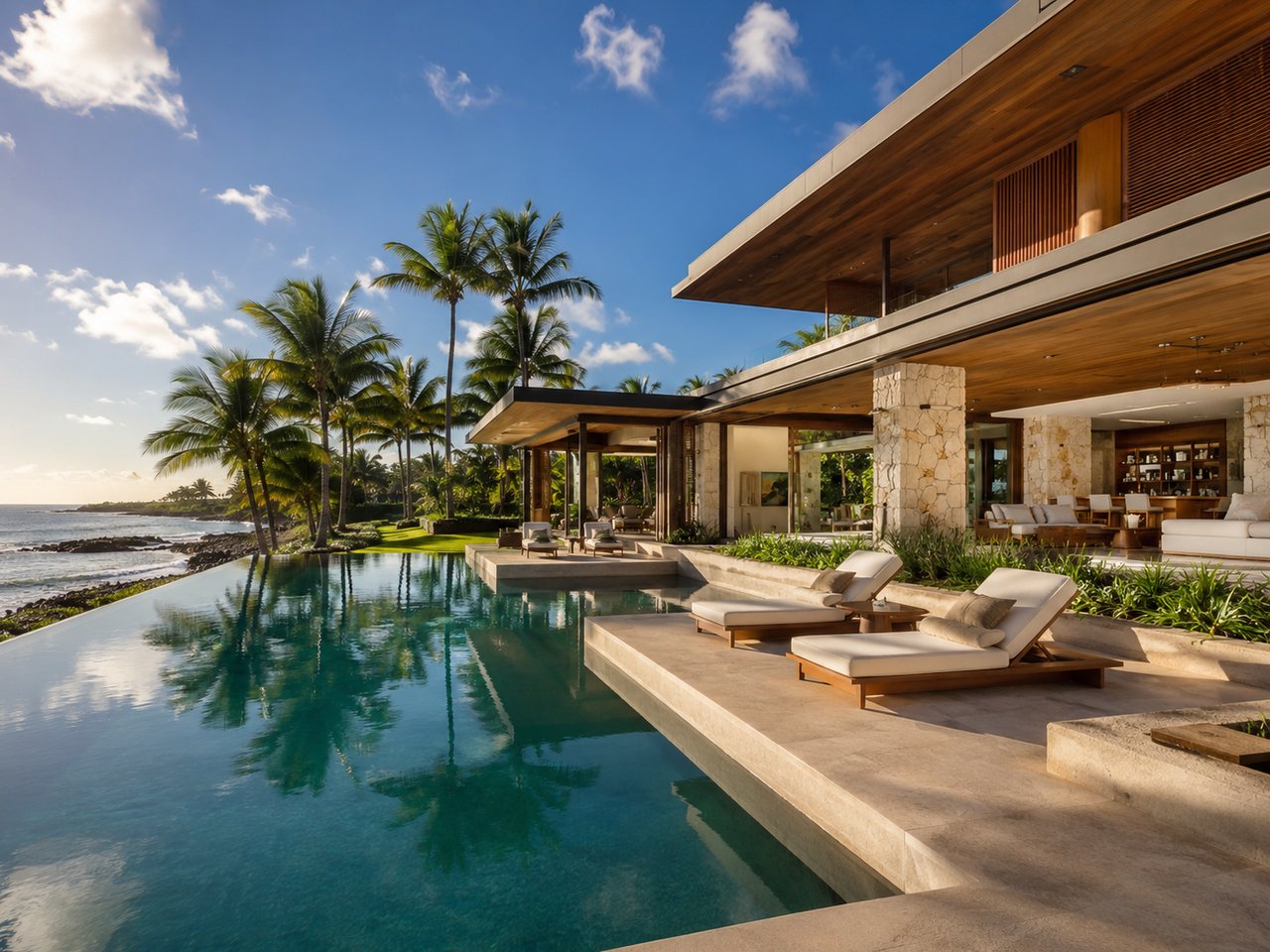
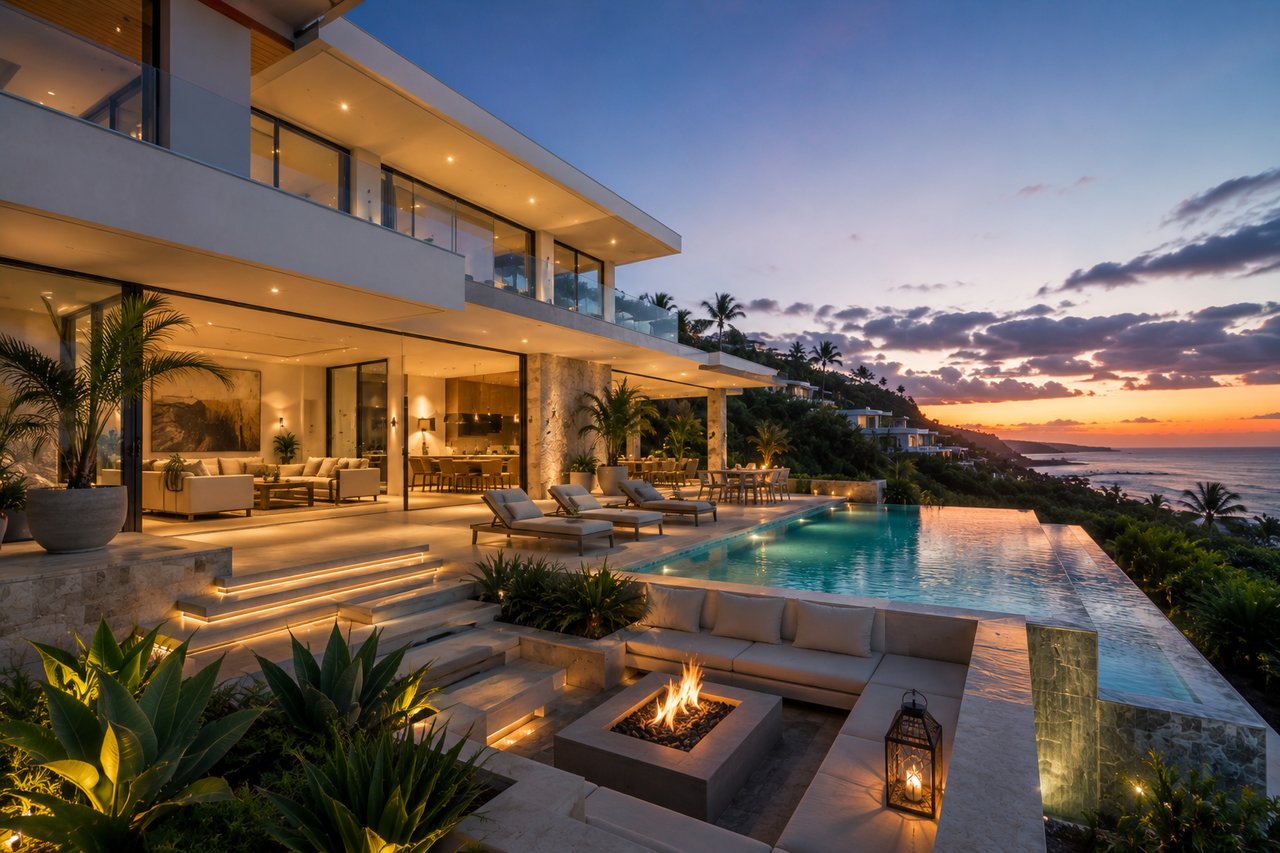
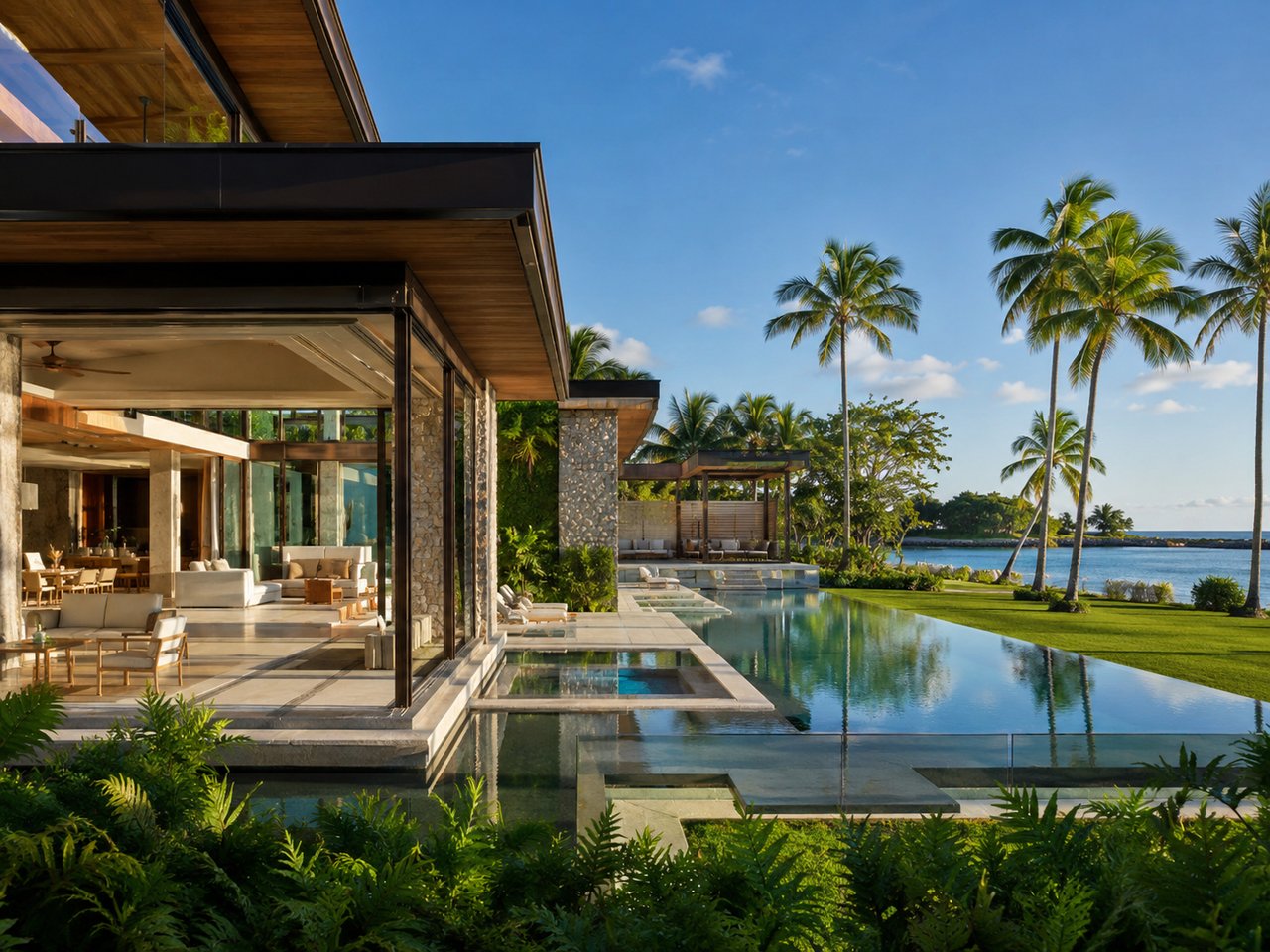
In Puerto Rico, outdoor living can effectively expand the usable footprint of a residence.
For multigenerational families, this is particularly valuable.
Outdoor areas can create separate zones for:
- Dining
- Children
- Pool use
- Lounging
- Quiet reading
- Entertaining
- Exercise
A well-designed outdoor environment allows family members to spend time together while still maintaining personal space.
Privacy should also be considered.
A pool overlooking neighboring properties may provide less family comfort than a smaller pool surrounded by thoughtful landscaping and protected sightlines.
6. Guest Suites Can Create Valuable Independence
A proper guest suite is more than an additional bedroom.
For a multigenerational family, it can function as a semi-independent living area.
Features may include:
- Private bathroom
- Separate entrance
- Sitting area
- Small kitchenette
- Dedicated terrace
- Independent parking
This can be particularly useful when adult children, grandparents, or extended family members spend long periods at the residence.
It also increases the property's flexibility if family circumstances change.
7. Consider Staff and Service Areas
Larger luxury residences often involve household support.
For multigenerational families, discreet service circulation can make a major difference.
Consider whether the property has appropriate space for:
- Housekeeping
- Property management
- Maintenance
- Security
- Pool and landscaping personnel
- Drivers or other household support
The ideal arrangement allows service providers to maintain the property without unnecessarily disrupting family life.
This is one of the less visible characteristics of a truly well-designed luxury home.
8. Security Should Support Family Life
Security requirements can change when several generations share one property.
Families may want:
- Controlled access
- Secure parking
- Exterior lighting
- Cameras
- Remote monitoring
- Gated entry
- Safe pool access
- Private areas for children
The objective is not to make the residence feel fortified.
It is to create an environment where different generations can use the property comfortably and confidently.
Security should therefore be integrated into the architecture and daily operation of the home.
9. Think About Technology
A multigenerational residence can benefit from technology that simplifies rather than complicates daily life.
Useful systems can include:
- Smart lighting
- Climate controls
- Security monitoring
- Motorized shades
- Automated gates
- Home audio
- Wi-Fi management
- Backup internet
- Energy monitoring
The key is ease of use.
A luxury home filled with technology that nobody understands is not particularly sophisticated.
The best systems operate quietly in the background and allow different generations to control the parts of the home they use.
10. Choose a Location That Works for Multiple Generations
Location becomes more complicated when a property must serve people with different priorities.
A younger family member may value proximity to restaurants, activities, and work.
An older family member may prioritize healthcare access, convenience, quiet surroundings, and easy mobility.
Children may need schools, recreation, and safe outdoor environments.
A multigenerational buyer should therefore consider the daily needs of the entire family, not simply the preferences of the principal purchaser.
This can make accessibility to San Juan, established residential communities, resort environments, or other lifestyle centers particularly relevant depending on the family's priorities.
11. Think About the Home as a Legacy Asset
Some luxury properties are purchased specifically because the family expects to keep them for many years.
That changes the acquisition criteria.
The buyer should ask:
- Can the home adapt as children become adults?
- Can older family members live comfortably?
- Can additional guests be accommodated?
- Can different family members use the property independently?
- Is maintenance manageable?
- Does the location have enduring appeal?
- Could the property eventually be passed to the next generation?
A legacy property should not be designed around one stage of family life.
It should have enough flexibility to evolve.
The WoodsLux Perspective
A multigenerational luxury home should feel generous without feeling oversized.
The best properties create privacy without isolation, togetherness without crowding, and flexibility without sacrificing architectural character.
At WoodsLux Realty, we believe families should evaluate these properties according to how they will actually live—not simply by bedroom count or square footage.
A residence with fewer but better-designed spaces may serve a multigenerational family more effectively than a much larger property with poor circulation and limited privacy.
For families searching Puerto Rico's luxury market, the right home is often the one that allows everyone to have a place within the property while still creating a shared sense of home.
Explore WoodsLux's active luxury listings above $1 million.
Conclusion
For multigenerational families, luxury is not simply more space.
It is better space.
The right property gives different generations the ability to spend time together, retreat privately, welcome guests, accommodate changing needs, and enjoy the residence comfortably for years to come.
That means buyers should look beyond bedrooms and square footage.
They should evaluate circulation, privacy, accessibility, outdoor living, guest accommodations, technology, service areas, security, and long-term flexibility.
When those elements come together, a luxury home can become more than a residence.
It can become a family asset designed to remain relevant across generations.
Frequently Asked Questions
What makes a luxury home suitable for multiple generations?
Separate bedroom zones, flexible living areas, guest suites, accessibility, outdoor space, and multiple gathering areas can make a home more adaptable.
How many bedrooms should a multigenerational luxury home have?
There is no universal number. The layout and privacy between bedrooms can be more important than the total count.
Are elevators useful in multigenerational homes?
Yes. Elevators can improve accessibility while also making everyday tasks such as moving luggage and groceries easier.
Should grandparents have a separate living area?
It can be beneficial. A private suite or living zone provides independence while keeping family members close.
Is outdoor space important for multigenerational families?
Yes. Multiple outdoor zones can allow family members to gather, relax, entertain, or spend time separately.
Should a multigenerational home have a guest suite?
A well-designed guest suite can provide valuable flexibility for extended family, visitors, or adult children.
What location factors should families consider?
Consider schools, healthcare, services, accessibility, recreation, security, airport access, and the needs of each generation.