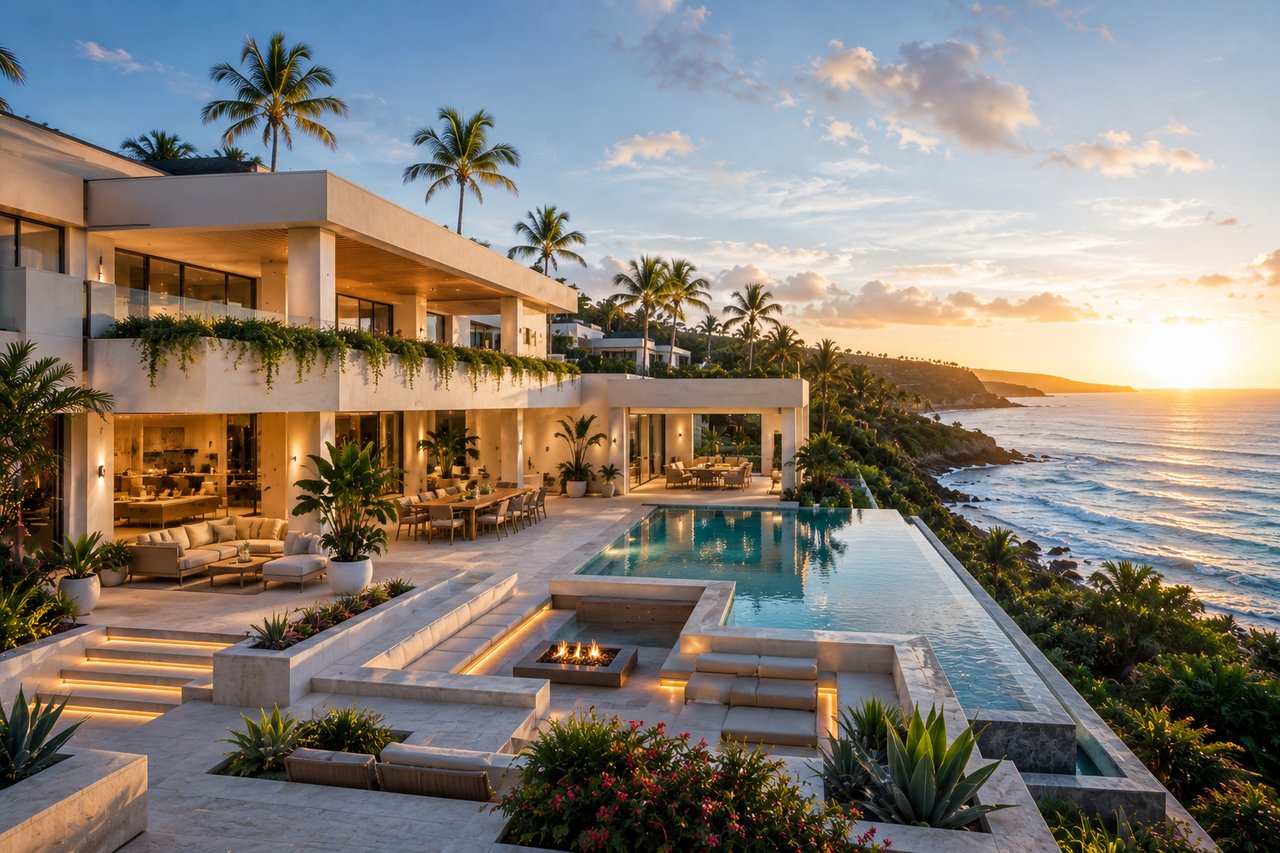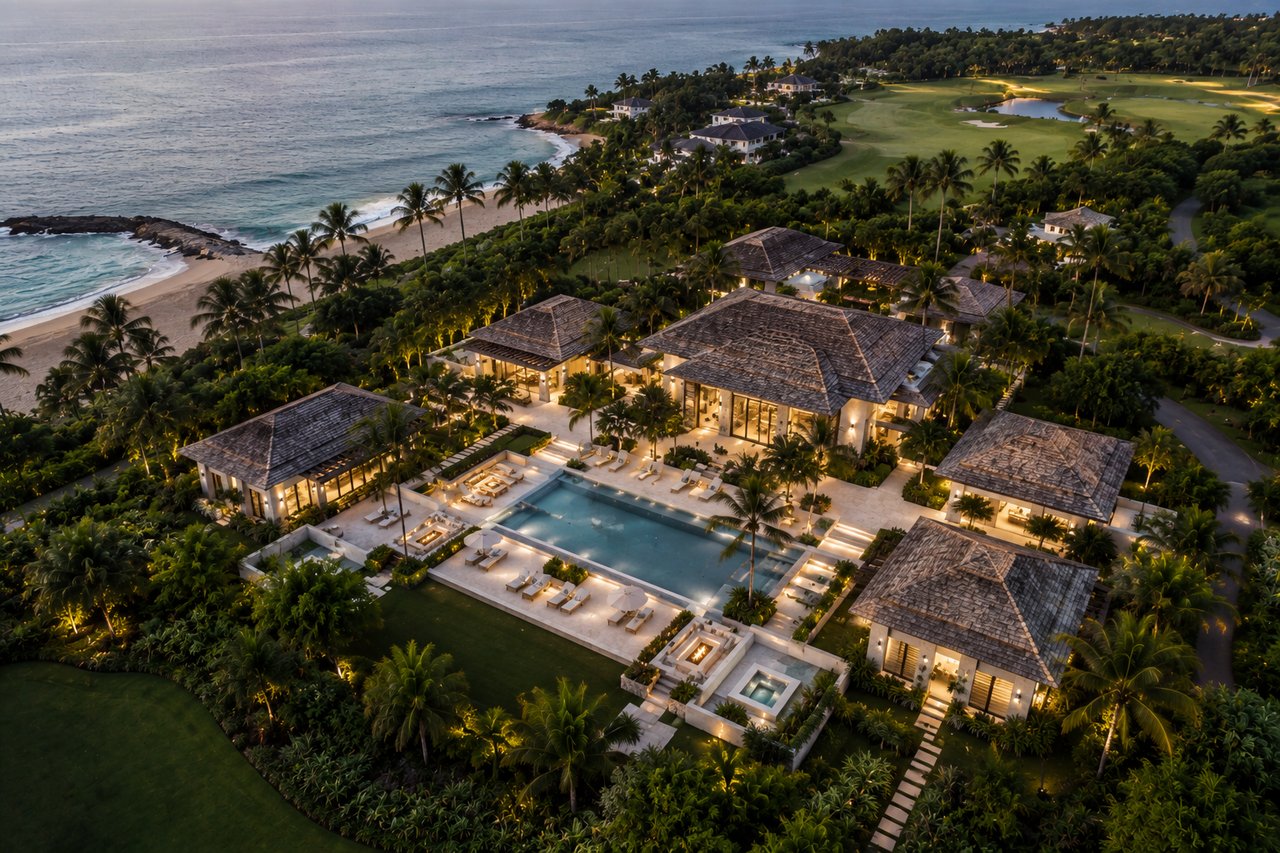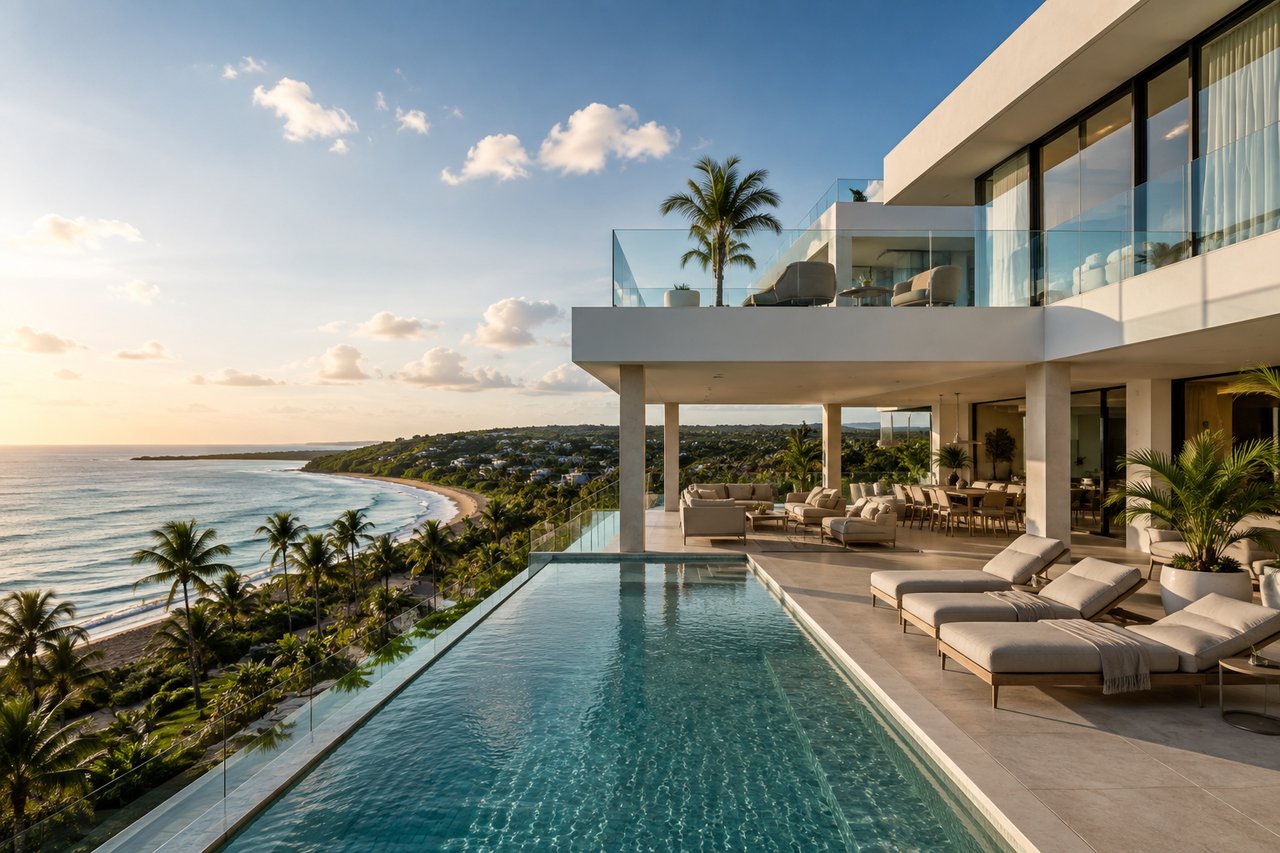
For luxury buyers, new construction can offer something that established inventory cannot: the opportunity to acquire a residence designed around contemporary expectations from the beginning.
Modern architecture, energy-efficient systems, open floor plans, resort-style amenities, advanced technology, new infrastructure, and customization can make a newly built property particularly attractive to buyers relocating to Puerto Rico or purchasing a second home.
But “new” should never be treated as synonymous with “better.”
A new luxury residence is still a real estate investment. The buyer is evaluating not only the finished home, but also the developer, construction process, location, community, association structure, delivery timeline, operating costs, warranties, and eventual resale market.
Puerto Rico's luxury development landscape has continued to expand in 2026, particularly in established coastal and resort markets. Current projects span branded residences, private communities, luxury condominiums, and large-scale resort developments. At the same time, market research indicates that construction costs, permitting, labor availability, and development timelines remain important considerations for buyers.
For a sophisticated buyer, the central question is therefore not simply “Should I buy new construction?”
It is:
“Does this particular new development make sense as a long-term luxury asset?”
1. Understand What “New Construction” Actually Means
Not every new property represents the same type of purchase.
A buyer could be considering:
- A completed new construction home
- A recently completed condominium
- A residence under construction
- A pre-construction condominium
- A custom home being built on an individual lot
- A residence within a larger master-planned development
- A newly renovated property being marketed as essentially new
These scenarios involve very different levels of risk.
A completed home allows the buyer to inspect the actual property, evaluate finishes, test systems, and understand the surrounding environment.
A pre-construction purchase is different. The buyer is committing to an asset that does not yet fully exist.
That means architectural plans, specifications, developer history, construction contracts, projected delivery dates, association documents, and financial structures become much more important.
The distinction matters because the earlier you buy in the development process, the more uncertainty you may be accepting.
2. Evaluate the Developer Before Evaluating the Finishes
Luxury buyers can become understandably focused on architecture and design.
Before getting too far into finishes, however, investigate the developer.
A sophisticated review should consider:
- Previous completed projects
- Construction quality
- Delivery history
- Reputation
- Financial strength
- Experience with comparable developments
- Contractor relationships
- Post-closing service
- Warranty practices
- History of changes between marketed concepts and delivered properties
This is particularly important in pre-construction.
Renderings show possibilities.
Contracts, specifications, permits, construction schedules, and the developer's track record provide a better indication of what the buyer is actually acquiring.
Current Puerto Rico buyer guidance on pre-construction emphasizes developer credibility, deposit structures, delivery timelines, execution risk, and the future market for the completed asset.
In other words, you are not only buying a residence—you are underwriting the developer's ability to deliver it.
3. Study the Location Before Falling in Love With the Development
A beautiful new building cannot change the fundamentals of its location.
This is especially important in Puerto Rico because luxury markets are highly localized.
Dorado, Condado, Bahía Beach, Guaynabo, Rio Grande, Cabo Rojo, and other markets appeal to different buyer profiles and offer different ownership experiences.
The right question is not:
“Is this one of Puerto Rico's newest luxury developments?”
It is:
“Who will want to own this property five or ten years from now?”
Consider:
- Accessibility
- Airport proximity
- Beach access
- Walkability
- Restaurants and services
- Schools and family infrastructure
- Golf or resort amenities
- Privacy
- Security
- Neighborhood character
- Future development nearby
- Supply of competing luxury properties
Location remains one of the strongest determinants of long-term liquidity.
A spectacular residence in an established luxury market may ultimately have a broader resale audience than an equally impressive property in a location where the luxury buyer pool is still developing.
4. Understand the Difference Between Developer Pricing and Market Value
New construction frequently comes with a premium.
That premium may be justified.
Buyers may be paying for:
- New infrastructure
- Contemporary architecture
- Modern mechanical systems
- Customization
- Amenities
- Brand affiliation
- Resort services
- Construction warranties
- Scarcity
- Early access to a new community
But a premium should still be analyzed.
Do not evaluate the asking price only against another new property.
Compare it against:
new construction + high-quality resale inventory + comparable properties in the same market.
A buyer should ask:
- What does comparable resale inventory sell for?
- How much more am I paying for new?
- Is the premium supported by the location?
- Are the finishes genuinely superior?
- Does the property have a scarcity factor?
- What will competing inventory look like when this residence is delivered?
This last question is especially important in pre-construction.
The property is being purchased today, but its competitive set may look different when it is completed.
5. Read the Specifications, Not Just the Brochure
Luxury development brochures are designed to communicate a lifestyle.
The buyer's due diligence should communicate something else:
exactly what is included.
Review the specifications carefully.
Questions may include:
- What appliances are included?
- What lighting is included?
- Are window treatments included?
- What flooring and stone are specified?
- What cabinetry is included?
- What plumbing fixtures are included?
- Is smart-home technology included?
- What landscaping is included?
- What pool equipment is included?
- What generator or backup system is included?
- Are solar and battery systems included?
- What is considered an upgrade?
- What happens if a specified material becomes unavailable?
The difference between “luxury finishes” in marketing language and the actual contractual specifications can be significant.
For a multimillion-dollar purchase, the specifications should be reviewed with the same seriousness as the purchase price.
6. Construction Quality Matters More Than Design Trends
A property can photograph beautifully while still having weaknesses that will matter over time.
Luxury buyers should pay attention to the underlying construction.
Important considerations can include:
- Roofing systems
- Waterproofing
- Windows and doors
- Drainage
- Electrical infrastructure
- HVAC systems
- Plumbing
- Exterior materials
- Corrosion resistance
- Hurricane resilience
- Water-management systems
- Backup power
- Solar and battery infrastructure
Puerto Rico's climate makes these considerations particularly relevant.
A new home should not simply look contemporary.
It should be appropriately designed for its environment.
For coastal properties, buyers should also consider how materials and mechanical systems are likely to perform under prolonged exposure to humidity, salt air, sun, and severe weather.
The objective is long-term performance—not merely first-day presentation.
7. Ask About Resilience From the Beginning
Resilience should be part of the conversation before construction is complete, rather than treated as an upgrade after closing.
Ask how the development addresses:
- Hurricane conditions
- Backup electricity
- Water storage
- Drainage
- Stormwater management
- Communications
- Emergency access
- Building envelope protection
- Common-area power
- Elevator operation
- Security infrastructure
This is particularly important for second-home owners.
A primary resident may notice an infrastructure problem immediately.
An owner who spends only part of the year in Puerto Rico needs confidence that the property can be monitored, maintained, and operated when the owner is away.
In 2026, some major Puerto Rico developments are explicitly incorporating resilience and sustainability into their planning. For example, the newly approved Esencia development in Cabo Rojo has announced a master plan incorporating solar power and substantial conservation areas.
That does not mean every development will offer the same infrastructure.
It means buyers should make resilience a property-specific question rather than an assumption.
8. Understand the Delivery Timeline
For pre-construction buyers, the delivery date is one of the most important variables in the transaction.
Construction schedules can change because of:
- Permitting
- Materials
- Labor
- Weather
- Design changes
- Infrastructure
- Inspections
- Contractor issues
- Financing
- Other development dependencies
A buyer should understand what the purchase agreement says about delays.
Questions to consider include:
- What is the estimated completion date?
- Is there a contractual outside date?
- What happens if construction is delayed?
- Can the developer modify plans?
- Under what circumstances can the buyer cancel?
- How are deposits handled?
- When does the buyer take title?
- When does the warranty begin?
This is where experienced legal counsel becomes particularly important.
The real estate professional can help the buyer understand the market and property.
The buyer's attorney should review the legal commitments.
9. Investigate the Association and Future Ownership Costs
A luxury property does not become inexpensive simply because it is new.
In fact, some new developments introduce substantial association, amenity, or service costs.
Before purchasing, buyers should understand:
- HOA or condominium fees
- Reserve structures
- Amenity fees
- Club memberships
- Resort fees
- Insurance responsibilities
- Common-area maintenance
- Landscaping
- Security
- Generator maintenance
- Elevator maintenance
- Pool maintenance
- Future assessments
- Property management options
This becomes particularly important in branded or resort-oriented developments.
The buyer is not simply purchasing square footage.
They may also be purchasing access to a sophisticated operating ecosystem.
That ecosystem can be highly valuable—but its cost should be understood before closing.
10. Think About Resale Before You Buy
Luxury real estate should be evaluated from both sides of the transaction.
Ask yourself:
If I needed to sell this property five years from now, who would buy it?
That question can reveal weaknesses that are easy to overlook during the initial purchase.
Consider:
- Is the location established?
- Is the floor plan broadly appealing?
- Is the property too customized?
- Is the community likely to remain desirable?
- Will there be significant new competing inventory?
- Are association fees reasonable for the market?
- Is the property easy to maintain?
- Does it offer something genuinely scarce?
New construction often has an initial advantage because the property is modern.
But eventually, it becomes resale inventory.
At that point, the buyer's original purchase price must compete with the next generation of new construction.
11. New Construction vs. Luxury Resale
There is no universal winner.
New Construction
Potential advantages:
- Modern design
- New systems
- Contemporary layouts
- Customization opportunities
- Warranties
- Lower immediate renovation requirements
- New amenities
Potential considerations:
- Construction risk
- Delivery uncertainty
- Developer risk
- Higher pricing
- Uncertain operating history
- Future competition
Luxury Resale
Potential advantages:
- Known condition
- Immediate occupancy
- Established landscaping
- Established community
- Real-world operating costs
- More evidence for valuation
- Ability to inspect the actual property
Potential considerations:
- Renovation requirements
- Older mechanical systems
- Deferred maintenance
- Less customization
- Potentially outdated design
The right decision depends on the buyer's priorities.
A buyer who values immediate occupancy and certainty may prefer a completed resale.
A buyer who wants modern architecture, customization, and the opportunity to enter a new community may prefer new construction.
The WoodsLux Perspective
New construction can be one of the most compelling segments of Puerto Rico luxury real estate—but only when the buyer looks beyond the presentation.
The strongest new-construction opportunities combine location, developer credibility, architectural quality, resilience, thoughtful infrastructure, sensible operating costs, and a clear future buyer profile.
For WoodsLux, the evaluation does not end with asking whether a property is new.
We look at the larger picture:
What is being built? Where is it being built? Who is building it? What will ownership feel like? And what will the property be worth to the next buyer?
Those questions become particularly important in a market where new luxury developments are appearing alongside established properties and where buyers have more sophisticated choices than simply choosing between “old” and “new.”
A new residence should earn its premium.
For buyers searching for currently active Puerto Rico luxury properties at $1 million and above, explore the current WoodsLux inventory:
Explore Active WoodsLux Luxury Properties
Conclusion
Buying a new construction luxury home in Puerto Rico offers the possibility of owning a residence built around today's standards rather than yesterday's.
But newness alone does not establish value.
The best decisions come from evaluating the entire asset: the developer, location, specifications, construction quality, resilience, delivery schedule, association structure, operating costs, and future resale position.
For pre-construction buyers, the analysis becomes even more important because the investment is partly a commitment to a future product.
For completed new construction, the advantage is greater certainty—but the buyer should still inspect the property thoroughly and compare its price with established resale inventory.
Ultimately, the goal is not simply to own something new.
It is to own something well-positioned.
In Puerto Rico's evolving luxury market, that distinction can make all the difference.
Frequently Asked Questions
Is buying new construction in Puerto Rico a good idea?
It can be, particularly for buyers who value modern design, customization, new infrastructure, and lower immediate renovation needs. The specific development, developer, location, and pricing should be evaluated individually.
What should I research before buying a pre-construction property?
Review the developer's track record, purchase agreement, deposit structure, specifications, projected delivery, association documents, operating costs, and the property's future competitive position.
Is new construction more expensive than buying a resale luxury home?
Not necessarily, but new properties often command a premium. Buyers should compare the asking price with comparable new and resale properties in the same market.
How important is the developer when buying a new luxury property?
Extremely important. The developer's experience, construction record, financial strength, delivery history, and warranty practices can materially affect the buyer's experience and risk.
What should I know about HOA or condominium fees?
New developments can have significant recurring costs associated with security, amenities, landscaping, insurance, reserves, maintenance, and shared infrastructure. Buyers should understand the complete ownership structure before committing.
Should I buy pre-construction or a completed luxury home?
Pre-construction can provide customization and early access, but involves greater uncertainty. Completed properties provide a tangible asset that can be inspected and evaluated before closing. Neither is universally better.
Does new construction automatically mean better resale value?
No. Long-term value still depends on location, architecture, scarcity, quality, operating costs, community desirability, and the supply of competing properties when the owner eventually sells.